AI-generated from sources
The Necessary Unreality, The Lyrical Truth of Opera
In Brief
- Opera thrives on an inherent "unreality" where characters express passion through song, a convention that audiences willingly accept as the foundation of its emotional power.
- The art form is defined by a persistent tension between the demands of dramatic coherence and the abstract, formal structures of music, a debate exemplified by historical views on the primacy of either the libretto or the score.
- Composers like Giacomo Puccini achieved widespread appeal by fusing the realism of the verismo movement with sweeping lyricism, creating works that explored universal emotions through identifiable worlds and beautiful melodies.
- Music in opera acts as an alchemical agent, elevating narratives beyond photographic realism into a symbolic sphere, thereby mitigating harsh dramatic subjects and revealing a deeper, poetic truth that transcends literal text.
Main authors
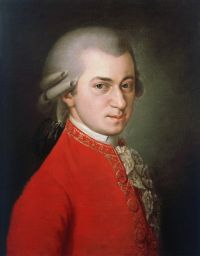
Opera presents its audience with a fundamental paradox: it is an art form predicated on an essential and accepted unreality [3]. In the world of opera, characters do not speak their passions, they sing them, an expressive mode that has little to no counterpart in daily existence [2]. This willing suspension of disbelief is not a barrier to entry but the very foundation upon which the genre's emotional power is built. By embracing conventions like sung dialogue, opera establishes a distinct reality, one that is intentionally remote from the matter-of-fact world and which thrives on a certain intangibility of time and place [4]. This artistic choice allows for a unique exploration of human nature, absolute in its expressive aims and untethered from the constraints of pure verisimilitude or didactic purpose [5].
This foundational premise, however, gives rise to a perpetual and defining tension between the demands of drama and the imperatives of music [1]. The central question that has shadowed the art form since its inception is whether a compelling, psychologically coherent drama can coexist with the abstract and formal structures of music. For some, like Wolfgang Amadeus Mozart, there was no question: poetry must ultimately be the obedient daughter of music, as melody and harmony possess the power to make an audience forget even the most flawed libretto [6]. Yet, others maintain that music cannot generate emotion in a vacuum; it requires a strong dramatic framework, with well-defined characters and situations, to give its expressive potential direction and meaning [7]. The history of opera can thus be read as a continuous negotiation between these two forces, a search for an elusive equilibrium where neither the body of the drama nor the spirit of the music is compromised .
An Art of Accepted Conventions
The power of opera is intrinsically linked to its
unnaturalness,
a quality that audiences have historically accepted as a necessary convention for the combined enjoyment of music and theater . This acceptance is not dissimilar to the conventions of Shakespearean tragedy, where characters speak in verse, or of ballet, where they communicate solely through dance . In fact, an aggressive modernity or an insistence on mundane realism can shatter this delicate illusion, drawing unwelcome attention to the inherent artificiality of sung dialogue . The most effective operas often deal with timeless principles of human nature rather than fleeting contemporary issues, creating a space that is independent of both rational argument and moral instruction .
Within this framework, a central debate revolves around the hierarchical relationship between the libretto and the score. The 18th-century perspective articulated by Mozart champions the supremacy of music, arguing that its emotional force can redeem even a weak text and is the primary reason for opera's widespread appeal . From this viewpoint, the words exist mainly to serve the music's expressive needs. An opposing school of thought, however, insists that a music-drama must first and foremost obey the laws of drama . Without a coherent plot and characters experiencing vivid, contrasting sentiments, the composer has no emotional substance to translate into musical language . The music, in this sense, serves to illuminate the inner emotional lives of the characters, making their passions transparent to the audience in a way that words alone cannot [8].
The failure to resolve this tension can lead to works that are dramatically inert or musically uninspired. A frequent criticism, particularly of certain traditions within Italian opera, is that composers have sacrificed dramatic integrity for the sake of creating vocal showcases designed to flatter the vanity of singers [11]. In these cases, agreeable melodies that could be attached to any words take precedence over the nuanced depiction of passion called for by the drama . The acting style in opera has also been shaped by this musical dominance, leading to a conventional, theatrical mode of performance that prioritizes vocal production over naturalistic behavior [10]. Furthermore, the illusion is most fragile when the conventions are inconsistently applied, such as when characters switch between spoken dialogue and song, which can shock an audience's credulity and break the carefully constructed unreality of the performance [9].
Puccini and the Fusion of Realism with Lyricism
Giacomo Puccini stands as a central figure in modern Italian opera, particularly for his role within the verismo movement, which sought to portray everyday subjects with a heightened sense of realism [12, 16]. His works are celebrated for their humanness, depicting recognizable worlds like the makeshift artist studios of La Bohème, and exploring the universal emotions of love, grief, and suffering [13, 19]. Puccini’s approach to realism was reinforced by an orchestral style that descriptively adapted to the actions and words on stage, creating a vivid and immediate theatrical experience . He engaged deeply with his librettists, viewing the selection and crafting of the book as an experiential skill crucial to achieving dramatic power [20].
The defining quality of Puccini's work, however, is not its realism alone, but its marriage to a
sweeping lyricism
that provides his operas with their immense and immediate emotional appeal [14]. He possessed a profound understanding that the combination of frank, beautiful melody with swift dramatic emotion was a potent formula for popular success . This signature style—built on Italian tradition but distinctly modern—is characterized by beautiful melodies, piquant rhythms, and clever orchestration, which together create a sound that is recognizably his own [15]. Though his subjects are invariably tragic, the musical expression often has a lightness and charm that distinguishes it from the heavier, more ponderous works of some of his contemporaries [17]. His aim, particularly in works like Manon Lescaut, was to conjure the underlying emotional atmosphere of the story through a series of impressionistic scenes rather than a strictly linear narrative [18].
Despite his enormous popularity and status as a master of his craft, Puccini’s fusion of grit and melody was not without its critics [23]. Some found his broadside of orchestral force excessive for depicting subtle emotions, suggesting a lack of dynamic nuance [24]. A more significant critique was that his music sometimes lacked a strong element of characterization, applying a similar passionate intensity to diverse situations, whether a bohemian party or a tragic death . This could result in moments where the libretto, essential for clarifying the plot, seems at odds with the musical treatment, leaving what one critic called
pieces of grit
in the dramatic flow [25]. Even his technical mastery was sometimes questioned, with works like Madame Butterfly viewed as not entirely equal to the dramatic task of depicting its delicate subject matter [22]. Nonetheless, works like Tosca are praised for their masterful dramatic power and emotional climaxes, cementing Puccini's legacy as the foremost Italian opera composer of his time [21].
Music as an Agent of Poetic Transcendence
Ultimately, the unique power of opera lies in music’s capacity to elevate a story beyond photographic realism into a symbolic and idealized sphere [26, 28]. The infusion of the
unreal
—the structured, emotional language of music—into a
real
situation is what transforms narrative into poetry [27]. Music does not merely accompany drama; it transfigures it, creating a performance that can drench an audience in a mystic sense of existence that transcends the literal text . The formal elements of music and lyrical language, such as rhythm and harmony, act as a
luminous halo,
allowing for the unabashed expression of deep feeling without it being perceived as mere self-exposure [29].
This transformative quality allows opera to tackle difficult, even repellent, dramatic subjects. Through the
subtle alchemy
of the composer, a story that might seem bestial or loathsome on the page can become a thing of charm and expressive potentiality on the stage [30]. Music acts as an agent of mitigation, refining the grossness of a plot and weaving a cloak of poetic beauty around its stark realities [31]. By enlisting the ear as well as the eye, music can render symbolic themes more radiant and powerful. It can find the triumphant innocence within a sordid tale, pleading for a kind of emotional pardon that a purely spoken drama might not achieve . This elevation makes the drama
truly ideal because truly human,
tapping into a universal emotional truth that lies deeper than surface-level reality .
The operatic art form is forged in the crucible of a persistent, creative tension between the logic of drama and the expressive soul of music . Its very existence relies on a set of anti-realist conventions, where sung emotion is accepted as the natural language for characters navigating heightened circumstances . This
unnaturalness
is not a failing but a fundamental strength, opening a unique space for exploring the human condition with an intensity unavailable to purely mimetic art forms . The ongoing debate over whether the music should serve the libretto or vice versa highlights the delicate balance required for a successful synthesis, a challenge embodied by composers like Puccini, who fused the gritty realism of verismo with an overwhelming lyrical beauty to create works of enduring, if sometimes debated, power .
In the final analysis, the purpose of music in opera is not to replicate the world but to transfigure it. Music’s true function is alchemical: it elevates dramatic content to a symbolic plane, mitigating harsh realities and revealing a poetic truth that speech alone cannot convey . By giving form to the ineffable, music makes the drama more profoundly human, not by being more realistic, but by becoming more ideal . The enduring appeal of opera, therefore, lies not in its ability to show us life as it is, but in its unique power to reveal the deeper, emotional verities of existence through the transcendent language of song.