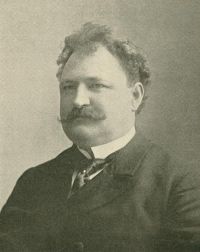
Henry Edward Krehbiel

Henry Edward Krehbiel

Summary

Portrait of Henry Edward Krehbiel Henry Edward Krehbiel Chapters of Opera

Love—gentle, constant, chivalric, tried, and triumphant—has been hymned amid pictures suggested by a millennium of human happenings, and its expression has passed through all the phases that the development of the most direct vehicle of emotional utterance could place at its service—from the melodramatic strivings of the amateurs who stumbled upon opera in their effort to reanimate the Greek drama to the glowing scores of Richard Wagner, in which high art and profound science are joined in a product as worthy of admiration as any other product of the intellect fired by inspiration.
Source: Gutenberg

Portrait of Henry Edward Krehbiel Henry Edward Krehbiel Chapters of Opera

In another sense, too, "Der Freischütz" is a national opera; the spirit of its music is drawn from the art-form which the people created. Instead of resting on the highly artificial product of the Italian renaissance, it rests upon popular song—folk-song, the song of the folk. Its melodies echo the cadences of the Volkslieder in which the German heart voices its dearest loves. Instead of shining with the light of the Florentine courts it glows with the rays of the setting sun filtered through the foliage of the Black Forest.
Source: Gutenberg

Portrait of Henry Edward Krehbiel Henry Edward Krehbiel Chapters of Opera

If the opera succeeds it will be because a larger public has discovered that the music which has been consorted with the old pictures, actions, and words has added to them an element either of charm or expressive potentiality hitherto felt to be lacking. Is that true? Has a rock of offense been removed? Has a mephitic odor been changed to a sweet savor by the subtle alchemy of the musical composer? Has a drama abhorrent, bestial, repellent, and loathsome been changed into a thing of delectability by the potent agency of music?
Source: Gutenberg

Get perspective with Kwize: daily news enlightened by great literature