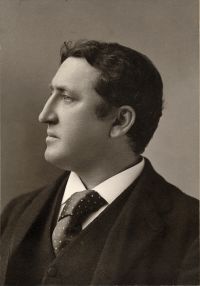
Johann Strauss II

Definition and stakes

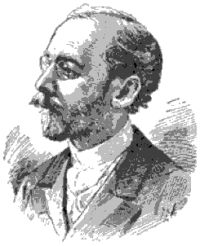
David Ewen The Lighter Classics in Music

Thus a new waltz king had arisen in Vienna. His reign continued until the end of the century. For fifty years Johann Strauss II stood alone and unequalled as the musical idol of Vienna. His performances were the talk of the town. His own music was on everyone’s lips. After the death of father Strauss in 1849, he combined members of the older man’s orchestra with his own, and toured all of Europe with the augmented ensemble. From 1863 to 1870 he was conductor of the Viennese balls, a post once held by his father. In 1872 he made sensational appearances in Boston and New York.
Source: Gutenberg

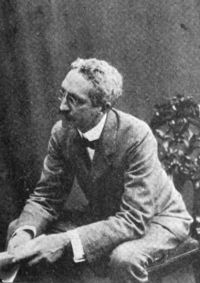
Portrait of H. L. Mencken H. L. Mencken Prejudices, Second Series

The waltz, in fact, is magnificently improper—the art of tone turned bawdy. I venture to say that the compositions of one man alone, Johann Strauss II, have lured more fair young creatures to lamentable complaisance than all the hyperdermic syringes of all the white slave scouts since the fall of the Western Empire. There is something about a waltz that is simply irresistible.
Source: Gutenberg

David Ewen The Lighter Classics in Music

Offenbach was the genius of the opéra-bouffe, or French operetta. His music never lacked spontaneity or gaiety, sparkle or engaging lyricism. His writing had the warmth of laughter, the sting of satire, and the caress of sincere and heartfelt emotion. His lovable melodies woo and win the listener. The lightness of his touch and the freshness of his humor give voice to the joy of good living. Like his celebrated Viennese contemporary, Johann Strauss II, Offenbach is a giant figure 223 in semi-classical music. To the lighter musical repertory he brings the invention and imagination of a master.
Source: Gutenberg

Get perspective with Kwize: daily news enlightened by great literature