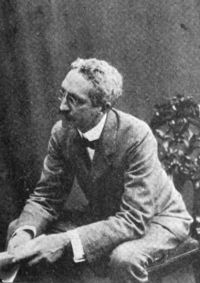
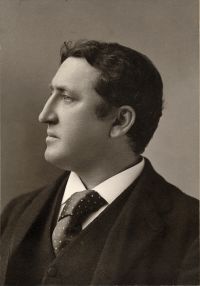
Lawrence Gilman

Biographical details

Lawrence Gilman,  Stories of Symphonic Music

“ Thus far only, the tonal poet wanders in the footsteps of the seer; he does not follow him from star to star, no more than yonder through the various circles of the damned. The idea of absolute bliss transcends human description. The composer could only point to it as a spiritual state that grows from a chain of experience. The union of the soul with God, in prayer, is foreshadowed in the instrumentation. After the sacred glow of divine love has inflamed the human heart, all pain has ceased, all other emotion is lost in the heavenly ecstasy of surrender to God's mercy. ”
Source: Gutenberg

Lawrence Gilman,  Edward MacDowell: A Study

“ Harmony is a frightful den for the small composer to get into—it leads him into frightful nonsense. Too often the accompaniment of a song becomes a piano fantasie with no resemblance to the melody. Colour and harmony under such conditions mislead the composer; he uses it instead of the line which he at the moment is setting, and obscures the central point, the words, by richness of tissue and overdressing; and all modern music is labouring under that. He does not seem to pause to think that music was not made merely for pleasure, but to say things. ”
Source: Gutenberg

Lawrence Gilman,  Debussy's Pelléas et Mélisande

“ Mélisande! Mélisande!—leave me alone with her!" "Trouble her not," gravely interposes Arkël. "Do not speak to her again.—You know not what the soul is.—We must speak in low tones now. She must no longer be disturbed. The human soul is very silent. The human soul likes to depart alone. It suffers so timidly! But the sadness, Golaud, the sadness of all we see!" At this moment the servants fall suddenly on their knees at the back of the room. Arkël turns suddenly: "What is the matter?" The physician approaches the bed and examines the body of Mélisande. ”
Source: Gutenberg

Get perspective with Kwize: daily news enlightened by great literature