“ I allude to the fact that the singer is necessarily a reproductive artist—one whose business it is from the nature of the case to reproduce and interpret the music of others.This imposes a duty and an obligation which should never be lost sight of. A singer has not only his own reputation to consider, but also that of the composer whose music he interprets, and for this reason alone, therefore, he can never take his art too seriously. ”
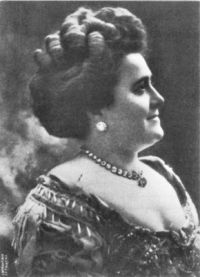
Luisa Tetrazzini
Summary
How to Sing by Luisa Tetrazzini is a practical guide for vocalists, offering insights into technique, interpretation, and the duties of singers as interpreters of composers’ work. Drawing on the legacies of figures like Caruso, Lilli Lehmann, and Battistini, Tetrazzini emphasizes regular practice, the study of dramatic context, and the importance of mastering breath control and tone.
She addresses the distinctions between voice types, the role of the gramophone in training, and the risks of overextending a singer’s physical and technical capabilities. Structured as both a manual for students and a reflection on artistic responsibility, the text underscores the fusion of discipline, natural talent, and respect for musical tradition. Its core argument—rooted in the interplay of teacher, pupil, and art—reveals singing as a rigorous craft demanding both technical accuracy and emotional authenticity.
Quotes from How to Sing (Luisa Tetrazzini)
“ Beyond a doubt the gramophone should be the guide, philosopher, and friend—the most trusted and most competent aid and coadjutor—not only to every student, but also to every teacher of the present day.Of course, the pupil is only human and often reluctant to believe that there are grave faults in his voice. Whilst others can detect his mistakes, the pupil cannot listen intelligently to his own faulty emission while singing. ”
“ If he happens to be studying some particular rôle he can be “coached” in this most practical and unrivalled manner by all the greatest artists of the day. He can take a particular aria and hear it sung by Caruso again and again until he is familiar with every detail of his rendering—can note his breathing, his phrasing, and every other detail in a manner which would be quite impossible by any other means. ”
