AI-generated from sources
Handel, Between Universal Acclaim and Critical Scrutiny
In Brief
- George Frideric Handel achieved a remarkably early and comprehensive mastery of musical styles, enabling him to compose across diverse genres with an objective pursuit of excellence.
- Handel's genius lay in perfecting existing musical forms and amplifying dramatic potential, rather than inventing new ones, leading to debates about his originality and influence on subsequent composers.
- His immense popular success, particularly with works like The Messiah, has paradoxically narrowed public understanding of his broader artistic range and subjected his music to misleading performance traditions.
- The critical re-evaluation of Handel's legacy often involves a contrast with J.S. Bach—Handel, the public cosmopolitan master; Bach, the reclusive intellectual whose profound genius was recognized posthumously.
Main authors

George Frideric Handel stands as a figure in music history who defies easy categorization [1]. His genius was marked by a command of style achieved remarkably early in his career, a mastery that was never rigidly fixed to one particular form of art . This adaptability allowed him to work across a vast range of genres with a practical, objective approach, guided less by a desire to innovate for its own sake and more by the simple pursuit of excellence [2]. This resulted in a body of work with a uniquely universal character, one that could appeal directly to the common listener as much as to the connoisseur, establishing a broad popular basis for his lasting fame [3, 4, 5].
This very universality, however, created an enduring critical paradox. While Handel's name achieved a level of renown that for generations seemed to place his work beyond reproach [6], later assessments began to question his developmental trajectory and stylistic originality [12]. Unlike contemporaries who blazed new artistic trails, Handel's genius was often seen as perfecting existing forms rather than creating new ones, a perception that fueled debates about his ultimate influence on subsequent musical history [15]. The contrast between his public-facing, dramatically immediate art and the reclusive, intellectual depth of a figure like Johann Sebastian Bach would come to define the complex and often contentious re-evaluation of his place in the musical canon [25, 28].
Early Mastery and Objective Universality
Handel's musical prowess manifested with extraordinary precocity, allowing him to attain a comprehensive mastery of his craft much earlier than many of his peers, including J. S. Bach . This early maturity was not channeled into a singular, narrow path. Instead, he demonstrated a remarkable versatility, producing masterpieces in virtually every contemporary genre without dedicating himself exclusively to any single one . His artistic development did not follow a clear, linear evolution; his primary goal appeared to be the impeccable execution of whatever task was at hand, a mission he pursued with an unerringly confident touch .
Underpinning this versatility was an objective and pragmatic philosophy of music. According to the analysis of Romain Rolland, Handel did not champion one style as artistically superior to others; for him, the only meaningful distinction was between good and bad music . This open-mindedness enabled him to absorb and excel within various established traditions without feeling compelled to revolutionize them . His genius lay in his ability to identify and amplify any spark of human interest or dramatic potential within a text, regardless of the quality of the libretto he was given [7].
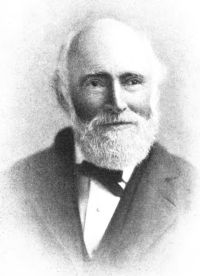
The direct consequence of this approach was music with a profound and wide-ranging appeal. Writing in the mid-19th century, John Sullivan Dwight celebrated Handel's art as an expression of a common humanity, a sound built upon a broad popular foundation . His compositions were conceived not for a small group of elites—as was often the case with courtly French opera—but for the people at large . This popular character became a hallmark of his work, ensuring a universal recognition that cemented his status . For over a century, this immense popularity endowed his name with an authority that effectively silenced most criticism .
Craftsmanship versus Revolutionary Originality
Despite his evident mastery, Handel's legacy has been persistently complicated by questions surrounding his originality and stylistic development. Critics writing in the late 19th century, such as John Alexander Fuller Maitland and William Barclay Squire, observed that he seemed to lack the inner drive to progress beyond the artistic methods of his time—a quality they deemed characteristic of the greatest composers . From this perspective, Handel was a supreme craftsman who perfected inherited forms rather than an innovator who forged new paths, a distinction that ultimately limited his direct influence on the composers who followed him .
This critique is closely linked to his compositional method, which involved the absorption and synthesis of the prevailing musical idioms of his era [9]. Indeed, early 20th-century scholarship suggests that what is often perceived as a uniquely "Handelian" style is in fact a masterful application of common 18th-century Italian and English formulas . He was less the creator of a new vocabulary and more the most eloquent speaker of the existing one. This has opened him to charges of unoriginality and even plagiarism, though defenders maintain that his borrowings were always transformed to serve a new and powerful dramatic purpose, refuting the notion that his work was formulaic [8, 10].
This debate extends to the fundamental aesthetic of his music. Edward FitzGerald's 19th-century observation that Handel "never gets out of his wig" colorfully captures the view that his art, for all its grandeur, remained tethered to the conventions of its age [11]. For some, his work represents the magnificent culmination of an artistic era rather than the beginning of a new one . A full appreciation of his genius, therefore, requires setting aside modern biases toward progress and originality and instead evaluating his work on its own terms, much like one would a piece of architecture [13]. It remains a speculative but intriguing question whether Handel himself would have perceived the complex harmonic language of a composer like Wagner as a beautiful advancement or as something formless and licentious [14].
The Burden of Success
Handel's unparalleled public success became a central, and often problematic, element of his legacy. A persistent historical narrative suggests that he turned to the oratorio only after failing in opera, belatedly discovering the form for which he was destined [16]. This view, however, simplifies a complex career and underestimates the immense success and artistic power of his operas, which in their day generated massive public excitement and fierce rivalries [19]. The fading of his operas from the standard repertoire in later eras may be attributed more to the loss of a specific style of vocal performance than to any inherent weakness in the works themselves [18].
Furthermore, the very dominance of a few select works—chief among them The Messiah—has paradoxically narrowed the public's understanding of his broader artistic range [21]. For modern listeners, this over-familiarity can create a misleading impression of monotony, obscuring the vast and varied musical language he employed throughout his career . His legacy also suffered from performance traditions that distorted his intentions, particularly the "mammoth" festival productions popular in the 19th century, which buried the nuances of his art beneath a colossal and unwieldy scale [22].
Even so, Handel's transformation of the oratorio into a grand dramatic art form stands as a monumental achievement, one whose impact on its genre is comparable to Wagner's later innovations in opera [20]. He possessed a unique ability to popularize the highest artistic ideals, succeeding not as a self-conscious reformer but as a practical man of the theater who created a powerful new form of musical drama . The critical challenge, then, is to see past the popular misinterpretations and legendary status to grasp the true nature of his greatness, which has perhaps never been overrated, only misunderstood .
A Tale of Two Titans, Handel and Bach
The critical comparison between Handel and his contemporary, Johann Sebastian Bach, illuminates two profoundly different approaches to art and life. Handel was a cosmopolitan figure, immersed in the public sphere, who composed with a keen awareness of his audience and the immediate dramatic effect of his music [24]. Bach, by contrast, worked in relative obscurity, driven by a deep intellectual and spiritual idealism, showing little interest in popular taste or the work of other composers . This fundamental divergence is audible in their work: Handel's art is built on broad emotional appeal and direct human expression, while Bach's is characterized by its intricate, reflective quality, demanding close attention from the listener [23, 27].
In their own lifetimes, these differences in temperament led to vastly different outcomes. Handel achieved international fame and commercial success, while Bach remained a provincial master whose profound genius was recognized by only a few [17]. As Romain Rolland observed, history often champions one great figure at the expense of another. The posthumous elevation of Bach in the 19th century triggered a critical re-evaluation that tended to diminish Handel's stature, with his worldly success viewed almost as a mark against him when compared to Bach's uncompromising artistic integrity .
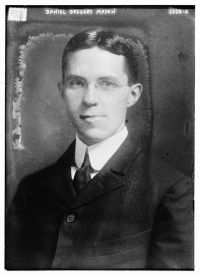
This historical reversal has decisively shaped their legacies. Bach is now widely seen as a foundational influence whose work has continuously inspired subsequent generations of composers [26]. Handel, on the other hand, is often framed as representing the end of a tradition—a composer who brought existing forms to their zenith but did not open new pathways for the future . Consequently, as aesthetic sensibilities shifted, some early 20th-century critics like Daniel Gregory Mason came to hear Handel's music as increasingly "archaic," while Bach's complex art seemed to grow ever richer, offering a promise of perennial discovery [29].
George Frideric Handel remains a figure of profound artistic paradoxes. He was, on one hand, a composer of immediate and near-universal appeal, whose pragmatic mastery of contemporary styles enabled him to craft works that spoke directly to a wide public . His objective, results-oriented approach allowed him to achieve greatness across diverse genres, from the dramatic intensity of Italian opera to the sacred grandeur of English oratorio . On the other hand, this very command of convention and focus on popular reception exposed him to later criticism regarding his originality and influence, particularly when his career was measured against the deeply personal and structurally innovative art of his contemporary, J.S. Bach .
The persistent debate over Handel's stature—weighing his immense popular success against a perceived lack of revolutionary vision—reflects the evolution of aesthetic values over the centuries . His fame, cemented by towering works like The Messiah, has at times served to obscure the full breadth of his genius while subjecting his music to performance practices far removed from his original intent . To fully appreciate Handel today requires moving beyond a simple narrative of artistic progress. It involves recognizing a composer whose greatness is found not in the invention of a new musical language, but in his inimitable ability to use the shared language of his time with a depth of human feeling and dramatic force that remains unequaled .