Summary

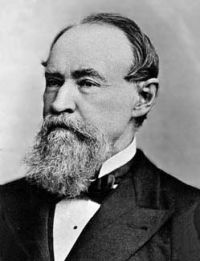
Portrait of William Ferrel William Ferrel An essay on the winds and the currents of the ocean (1856)

If the specific gravity of the atmosphere and of the ocean were everywhere the same, all the forces of gravity and of pressure which act upon any part of them, would be in exact equilibrium, and they would forever remain at rest. But as some parts of the earth are much warmer than others, and air and water expand and become rare as their temperature is increased, their specific gravities are not the same in all parts of the earth, and hence the equillibrium is destroyed, and a system of winds and currents is produced.
Source: Wikisource

Portrait of William Ferrel William Ferrel An essay on the winds and the currents of the ocean (1856)

But, upon any reasonable hypothesis, the water at the surface cannot lose by evaporation in passing from the poles to the equator, a stratum of water of such a depth, that the amount of salt contained in it can increase the specific gravity at the equator as much as the lower temperature increases it toward the poles; hence, if the salt of the sea has any sensible influence, it is only in opposition to a greater influence, and, consequently, it has a tendency to diminish, rather than increase, the currents of the ocean.
Source: Wikisource

Portrait of William Ferrel William Ferrel An essay on the winds and the currents of the ocean (1856)

If a stratum of water, one-half of an inch in thickness were taken up by evaporation from the torrid zone, and none of it precipitated there but all conveyed to the temperate and polar zones, it may be demonstrated upon the supposition that the ocean is four miles in depth, that the flow of water towards the equator to restore the equilibrium in the same time would not amount to a velocity of one foot per hour.
Source: Wikisource

Get perspective with Kwize: daily news enlightened by great literature