Specific gravity

Definition and stakes

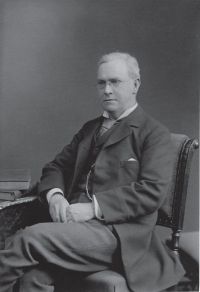
Portrait of William Stanley Jevons William Stanley Jevons,  The principles of science

“ Among the most constant circumstances under which we live is the force of gravity, which does not vary, except by a slight fraction of its amount, in any part of the earth’s crust or atmosphere to which we can attain. This force is sufficient to overbear and disguise various actions, for instance, the mutual gravitation of small bodies. It was an interesting experiment of Plateau to neutralise the action of gravity by placing substances in liquids of exactly the same specific gravity. ”
Source: Gutenberg

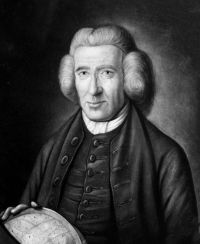
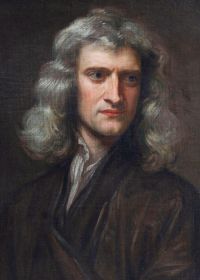
Portrait of Isaac Newton Isaac Newton,  The Mathematical Principles of Natural Philosophy…

“ All spaces are not equally Full. For if all spaces were equally full, then the specific gravity of the fluid which fills the region of the air, on account of the extreme density of the matter, would fall nothing short of the specific gravity of quick-silver, or gold, or any other the most dense body; and therefore, neither gold, nor any other body, could descend in air. For bodies do not descend in fluids, unless they are specifically heavier than the fluids. And if the quantity of matter in a given space, can, by any rarefaction, be diminished, what should hinder a diminution to infinity? ”
Source: Wikisource

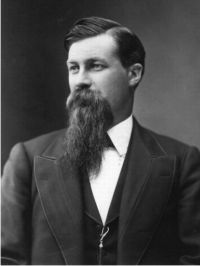
Portrait of Thomas C. Chamberlin Thomas C. Chamberlin,  Geology (1906)

“ In the effort at concentration under the powerful action of the earth’s gravity, the material of high specific gravity is urged more strongly toward the center, volume for volume, than that of less specific gravity, and as gravity is perpetually active, it follows that whenever any movement, molecular or molar, takes place which permits a readjustment of the positions of the two kinds of matter, the heavier sinks toward the center and the lighter rises, or at least tends to do so. ”
Source: Gutenberg

Get perspective with Kwize: daily news enlightened by great literature