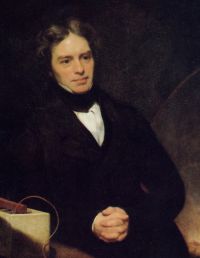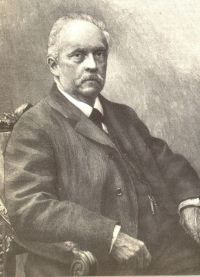
Hermann von Helmholtz

Biographical details

Portrait of Hermann von Helmholtz Hermann von Helmholtz,  On the Conservation of Force

“ Now, the external work of man is of the most varied kind as regards the force or ease, the form and rapidity, of the motions used on it, and the kind of work produced. But both the arm of the blacksmith who delivers his powerful blows with the heavy hammer, and that of the violinist who produces the most delicate variations in sound, and the hand of the lace-maker who works with threads so fine that they are on the verge of the invisible, all these acquire the force which moves them in the same manner and by the same organs, namely, the muscles of the arms. ”
Source: Wikisource

Portrait of Hermann von Helmholtz Hermann von Helmholtz,  On the Conservation of Force

“ All change in nature amounts to this, that force can change its form and locality without its quantity being changed. The universe possesses, once for all, a store of force which is not altered by any changed of phenomena, can neither be increased nor diminished, and which maintains any change which takes place on it.
You see how, starting from considerations based on the immediate practical interests of technical work, we have been led up to a universal natural law, which, as far as all previous experience extends, rules and embraces all natural processes
”
Source: Wikisource

Portrait of Hermann von Helmholtz Hermann von Helmholtz,  Popular Science Monthly (1881)

“ If any chemical force existed besides that of the electrical charges, which could bind all the pairs of opposite ions together, and require any amount of work to be vanquished, an inferior limit to the electro-motive forces ought to exist, which forces are able to attract the atoms to the electrodes and to charge these as condensers. No phenomenon indicating such a limit has as yet been discovered, and we must conclude, therefore, that no other force resists the motions of the ions through the interior of the liquid than the mutual attractions of their electric charges. ”
Source: Wikisource

Get perspective with Kwize: daily news enlightened by great literature