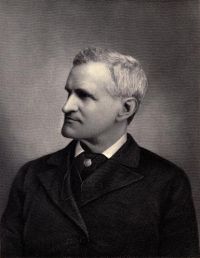
Jean-François Champollion

Definition and stakes

Great Men and Famous Women. Vol…

The deciphering of hieroglyphics is one of the greatest achievements of the human race in this century. Jean François Champollion was the man who accomplished this great feat. He is surnamed "le jeune," the younger, to distinguish him from his elder brother, Champollion Figeac, whose life was one of paternal devotion and the most unselfish sacrifice for his younger brother. Both were born in Figeac, in the south of France, François on December 23, 1790.
Source: Gutenberg

1911 Encyclopædia Britannica, Volume 5… (1911)

In March 1831 he received the chair of Egyptian antiquities, which had been created specially for him, in the Collège de France. He was engaged with Rosellini in publishing the results of Egyptian researches at the expense of the Tuscan and French governments, when he was seized with a paralytic disorder, and died at Paris in 1832. Champollion, whose claims were hotly disputed for many years after his death, is now universally acknowledged to have been the founder of Egyptology.
Source: Wikisource

1911 Encyclopædia Britannica, Volume 5… (1911)

CHAMPOLLION-FIGEAC, JACQUES JOSEPH (1778–1867) , French archaeologist, elder brother of Jean François Champollion, was born at Figeac in the department of Lot, on the 5th of October 1778. He became professor of Greek and librarian at Grenoble, but was compelled to retire in 1816 on account of the part he had taken during the Hundred Days. He afterwards became keeper of manuscripts at the Bibliothèque Nationale in Paris, and professor of palaeography at the École des Chartes. In 1849 he became librarian of the palace of Fontainebleau.
Source: Wikisource

Get perspective with Kwize: daily news enlightened by great literature