Summary

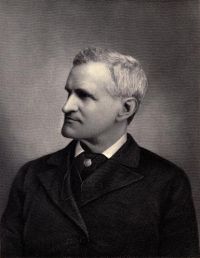
Portrait of Francis Parkman Francis Parkman Historic Handbook of the Northern Tour

As the sun rose above the eastern mountains the French camp was all astir. The column of Lévis, with Indians to lead the way, moved through the forest towards the fort, and Montcalm followed with the main body; then the artillery boats rounded the point that had hid them from the sight of the English, saluting them as they did so with musketry and cannon; while a host of savages put out upon the lake, ranged their canoes abreast in a line from shore to shore, and advanced slowly, with measured paddle-strokes and yells of defiance.
Source: Gutenberg

Portrait of Francis Parkman Francis Parkman Historic Handbook of the Northern Tour

Christmas day, 1635, was a dark day in the annals of New France. In a chamber of the fort, breathless and cold, lay the hardy frame which war, the wilderness, and the sea had buffeted so long in vain. After two months and a half of illness, Champlain, at the age of sixty-eight, was dead. His last cares were for his colony and the succor of its suffering families. Jesuits, officers, soldiers, traders, and the few settlers of Quebec followed his remains to the church; Le Jeune pronounced his eulogy, and the feeble community built a tomb to his honor.
Source: Gutenberg

Portrait of Francis Parkman Francis Parkman Historic Handbook of the Northern Tour

The army followed in such order as it might, crossed the bridge in hot haste, passed under the northern rampart of Quebec, entered at the Palace Gate, and pressed on in headlong march along the quaint narrow streets of the warlike town: troops of Indians in scalplocks and war-paint, a savage glitter in their deep-set eyes; bands of Canadians whose all was at stake,—faith, country, and home; the colony regulars; the battalions of Old France, a torrent of white uniforms and gleaming bayonets, La Sarre, Languedoc, Roussillon, Béarn,—victors of Oswego, William Henry, and Ticonderoga.
Source: Gutenberg

Get perspective with Kwize: daily news enlightened by great literature