“ Have you still a stone in your breast?”“Ah! sir!” sighed Peter, “when I had a heart of stone I never wept, my eyes were as dry as the land in July; but now my heart is breaking as I think of all I have done. My debtors I drove out to misery and want, and set my dogs upon the poor and sick, and you know alas! how my whip fell upon that snow-white brow!”“Peter, you have been a great sinner!” said the little man. “Money and idleness spoilt you; when your heart became as a stone you could feel neither joy, nor sorrow, neither remorse nor pity. ”
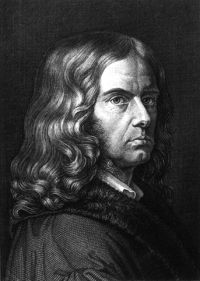
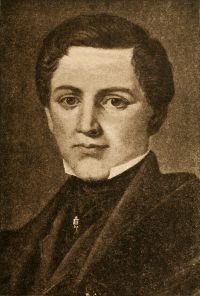
Wilhelm Hauff
Biographical details

Wilhelm Hauff (1802–1827), a German poet and novelist, is celebrated for his fairy tales, historical romances, and satirical prose. His works, such as Tales of the Caravan, Inn, and Palace and Lichtenstein, interlace moral allegories with vivid Orientalist and Swabian settings, while Der Mann im Mond showcases his incisive critique of sentimental literature.
Hauff’s stories, combining wit and social observation, continue to exert influence, underscoring his lasting impact on German literary culture.
Quotes by Wilhelm Hauff
 Wilhelm Hauff,
The Banished: A Swabian Historical Tale
Wilhelm Hauff,
The Banished: A Swabian Historical Tale
“ But when the Duke of Bavaria creates you a knight on the field of battle, for carrying desolation through our fields, when he decorates the neck of Albert von Sturmfeder with the chain of honour, for having been the foremost in crushing Würtemberg's citizens, may the joy of your thoughts not be troubled then, by having broken the heart of one so true to you--of one who loved you so tenderly! ”
Wilhelm Hauff,
Tales of the Caravan, Inn, and Palace
“ At night, after the master and his journeymen had gone out to refresh themselves after their day's work, an irresistible desire impelled Labakan to go back into the shop where the costume of the sultan's brother hung. He stood before it, lost in admiration over the splendor of the embroidery and the various shades of velvet and silk. He could not refrain from trying it on; and behold, it fitted him as perfectly as though it had been made for him. "Am I not as good a prince as anybody?" said he to himself, while striding up and down the room. ”
Wilhelm Hauff,
The Wine-ghosts of Bremen
“ Balthasar threw his cap up to the ceiling in his joy. In they came: Bacchus, my old friend who had bestrid the cask, had got down off it--not a rag of clothing on him--yet in he came, leading his blushing Rose, an ancient matron of stately mien and considerable stoutness of figure: splendidly dressed, too, she was like a true old Rhineland lady. Time might have written a few wrinkles on her brow and mouth, the fresh colour of youth might be a trifle wanting on her cheeks, but two hundred years had but added dignity to her contour. ”
Wilhelm Hauff,
The Banished: A Swabian Historical Tale
“ The old castle of Lichtenstein has long since fallen into ruin. A huntsman's house now occupies its foundations, light and airy, like a castle in the air, which imagination builds upon the ruins of antiquity. Würtemberg's fields spread themselves before the enchanted eye, rich and blooming as formerly, when Bertha by the side of her lover gazed upon them, and the most unhappy of her princes cast a farewell glance on his country from Lichtenstein's windows. The subterranean apartments of the castle, which received the exile, are still to be seen, in all their pride and glory ”
Wilhelm Hauff,
The Little Glass Man, and Other Stories
“ When these giants of the forest came over in their splendid clothes, wearing about their bodies half a hundredweight of silver, either in buckles, buttons, or chains, standing with sprawling legs and consequential look to see the dancing, swearing in Dutch, and smoking Cologne clay pipes a yard long, like the most noble Mynheers, then he pictured to himself such a raftsman as the most perfect model of human happiness. ”
Wilhelm Hauff,
Tales of the Caravan, Inn, and Palace
“ Jacob stood mute with terror. He felt of his nose; it was thick, and at least two hands long! So, too, had the old woman changed his figure so that his mother did not know him, and everybody had called him an ugly dwarf!"Master," said he, half crying, "have you a mirror handy, where I can look at myself?""Young master," replied his father gravely. "You do not possess a figure that should make you vain, and you can have no reason to look in a glass every hour. Break off the habit; it is an especially silly one for you to indulge in." ”
Wilhelm Hauff,
The Little Glass Man, and Other Stories
“ I suppose you want to see me, the steward of the palace, do you not? You wish to become dwarf to the duke, is it not so?’‘No, sir,’ replied the dwarf, ‘I am a clever cook and skilled in the preparation of all sorts of choice meats; be so kind as to bring me to the master of the kitchen; perhaps he may be in want of my skill.’‘Every one according to his wish, my little man; but you are an inconsiderate youth. To the kitchen! why, as the duke’s dwarf you would have nothing to do and plenty to eat and drink to your heart’s desire, and fine clothes into the bargain. ”
Wilhelm Hauff,
The Banished: A Swabian Historical Tale
“ But whether the spirit of the lady of Lichtenstein, with that of Albert and the old knight, inspires them, or whether the faithful musician of Hardt quits his grave, and, as he was wont to do during his life, mounts up to the castle to cheer it with music and song, we know not. Often have we reposed on these rocks on a still summer's evening, enjoying the landscape, talking over the good old times, witnessing the sun's descent, and observing the castle, standing alone and solitary, lighted up by its last rays. ”
Wilhelm Hauff,
The Wine-ghosts of Bremen
“ Fire laid his hand upon its eyes and said, "Thou shalt bear my sign upon thee for ever--there shall be fire in thee, albeit of such purity and transparency, that thou shalt impart noble courage beyond all other juice of the grape." And Air came in her golden garment of gossamer, and laid her hand upon the child's forehead and blessed him. "Be thy colour as bright and delicate as the golden edge of morning light upon the hills, as the golden tresses of the fair women of the Rheingau." ”
Wilhelm Hauff,
Tales of the Caravan, Inn, and Palace
“ He walked up and down the room, as if wondering at the riches of the king; but on coming to his slippers he slid into them, seized his stick, and tore off his false beard, revealing to the astonished king the well-known features of his exiled Muck. "Faithless King!" said he; "you, who reward fidelity with ingratitude, may keep as a well-merited punishment the deformity that you bear. I leave you those ears, that you may think daily on Little Muck." Thus speaking, the dwarf turned quickly on his heel, wished himself far away, and before the king could call for help, Little Muck had flown away. ”
“ Jacob, who had known the barber well in days gone by, crossed the road and entered his shop.“Good-morning, Urban,” he said, “I have come to ask a favour of you. Will you be so good as to allow me a glance into your looking-glass?”“With pleasure, there it stands,” he said laughing heartily, and the customer who was being shaved laughed also. “You are a handsome little fellow,” the barber went on, “tall and slim, a neck like a swan, hands as dainty as a queen’s, and as pretty a little nose as one could see anywhere. It is no wonder that you are conceited, and wish to take a glance at yourself. ”
Wilhelm Hauff,
The Little Glass Man, and Other Stories
“ Now, therefore, Peter, say your wishes; but mind you wish something good and useful.’‘Hurrah!’ shouted Peter; ‘you are a capital glass man, and justly do people call you the treasure-keeper, for treasures seem to be plentiful with you. Well, then, since I may wish what my heart desires, my first wish is that I may be able to dance better than the king of the dancing-room, and to have always as much money in my pocket as fat Hezekiel.’‘You fool!’ replied the little man angrily, ‘what a paltry wish is this, to be able to dance well and to have money for gambling. ”
Wilhelm Hauff,
The Wine-ghosts of Bremen
“ The men of Bremen thought differently. How cheerily and gaily the old boy rides on his cask: the round blooming face, the little bright eyes that looked down so wisely and yet so mockingly, the wide laughing mouth that has been the grave of so many a cask, the whole body overflowing with comfortable good living. ”
“ Whilst he was counting it Peter said: “You are a rascal, Michael, for you deceived me, telling me that I had a stone in my breast, and that you had my heart.”“And is it not so?” asked the astonished Michael, “can you feel your heart beat? Do you know what fear or remorse is?”“Ah! you have just made my heart stand still, but I have it still in my breast and so has Ezekiel. It was he who told me you had lied to us; you are not the one to take one’s heart out without his feeling it, that would be magic.” ”
Wilhelm Hauff,
The Banished: A Swabian Historical Tale
“ He stopped every moment in fresh surprise, and holding the torch high up, viewed in amazement and wonder the lofty and majestic vaulted arches which continued the whole length of the cavern, sparkling and glittering like thousands of crystals and diamonds. But his astonishment was still more excited when his leader, turning to the left, conducted him into a spacious grotto, which fancy might figure to itself the magnificent saloon of the subterranean palace.The fifer could not help remarking the powerful impression which this wonder of nature made on the mind of the young man. ”
Wilhelm Hauff,
Tales of the Caravan, Inn, and Palace
“ He looked around him in surprise, and beneath a splendid pine sat a little old man, dressed in a black jacket and red stockings, with a large hat on his head. He had a delicate, pleasing face, and a beard as fine as a spider's web. He smoked from a pipe of blue glass; and on approaching nearer, Peter saw, to his astonishment, that the clothing, shoes, and hat of the little man were all made of colored glass, but it was as flexible as though still hot, for it bent like cloth with every movement of the little man. ”
Wilhelm Hauff,
The Wine-ghosts of Bremen
“ There is a posterity which does honour to our name,' cried the knight. 'True,' cried Frau Rosa, 'these men would deserve to drink the water of the Rhine instead of the vine blossom of its hills if they could forget the name of the man who first planted us in the Rheingau. My dear friends and apostles, up! a health to our glorious founder and ancestor! to Kaiser Karl, to Kaiser Karl!' The glasses rang again; but Bacchus said, 'Yes, it was a beautiful and a glorious time, and I rejoice in it as I did a thousand years ago. ”
Wilhelm Hauff,
The Little Glass Man, and Other Stories
“ His first walk was to Michel, who received him with his former kindness. ‘Michel,’ said he, ‘I have now travelled and seen everything, but all is dull stuff and I have only found ennui. The stone I carry about with me in my breast, protects me against many things; I never get angry, am never sad, but neither do I ever feel joyful, and it seems as if I were only half alive. Can you not infuse a little more life into my stone heart, or rather, give me back my former heart? ”
Wilhelm Hauff,
The Banished: A Swabian Historical Tale
“ Banish gloomy thoughts from your mind, nunc vino pellite curas; drink, and let us hope for better times. I pledge you in this Würtemberg wine,--'to the Duke's happy return with his faithful followers!'"These words seemed to reanimate the sunken spirits of the knight, and like a ray of sunshine shed a smile over his features. "Yes!" he cried, "sweet is the word which sends comfort to the broken-hearted; it is like a drop of cold water to refresh the weary wanderer in the desert. Forget my weakness, my friend; pardon it in a man who otherwise never gives place to grief. ”
Wilhelm Hauff,
Tales of the Caravan, Inn, and Palace
“ Miss Goose? I would not have thought it! Well, now, don't be anxious; one knows how to live without having any designs on such a rare bird. But I would be willing to bet that you have not always had these feathers. I was myself once a contemptible little squirrel.""You are right," replied the goose, "in saying that I was not born with this ignominious form. Alas! it was never sung to me in my cradle that Mimi, daughter of the great Wetterbock, would meet her death in the kitchen of a duke!""Do not be uneasy, dear Miss Mimi," said the dwarf cheerfully. ”
Wilhelm Hauff,
The Banished: A Swabian Historical Tale
“ There is indeed a charm in the love of my people!""Away with these thoughts," said the old knight of Lichtenstein. "We are on the eve of battle; all is not yet lost; we have still time to repair the wrongs we have committed. You are surrounded by six thousand Würtembergers, and, by heavens! they will be victorious, if you lead them with confidence to the enemy. We are all friends here, my Lord! forgive your enemies; dismiss your chancellor, who can be of no service to you, he cannot use a sword.""No! remain by my side, thou tortoise! dog of a scribe!" said the Duke. ”
Wilhelm Hauff,
Tales of the Caravan, Inn, and Palace
“ When he passed down the street of a morning, with a superb cashmere turban wound about his head, and clad in a festival habit, and sash worth not less than fifty camels, walking with slow and solemn steps, his forehead so contracted that his eyebrows met, his eyes cast down, and at every fifth step stroking his long black beard with a thoughtful air--when he thus took his way to the mosque, to give readings from the Koran to the Faithful, as required by his office; then the people on the street paused, looked after him, and said to one another: "He is really a handsome, stately man." ”
Wilhelm Hauff,
The Banished: A Swabian Historical Tale
“ The departure of all the men, young and old, who could carry arms, caused many a beautiful eye to weep that night, when they marched out of Stuttgardt with the Duke, to the field of battle; but the wailing of the women and young maidens was drowned in the warlike noise of the marching army, resembling the sobs of a child amidst the raging of the elements. Bertha's grief, though almost overpowering, was silent, as she accompanied her husband to the door, where his servants awaited him and her father with their horses. ”
Wilhelm Hauff,
Tales of the Caravan, Inn, and Palace
“ Really, it is a sin for the sheik to free him! He is the handsomest slave in the whole country. Only look at his courageous face, his sharp eye, his noble form! He might give him some light duties, such as fan or pipe-bearing. It would be an easy matter to provide such an office for him, and truly such a slave as he would be an ornament to the palace. And the sheik has only had him three days, and now gives him away? It is folly! It is a sin!""Do not blame him--he, who is wiser than all Egypt;" said the old man, impressively. ”
Wilhelm Hauff,
The Banished: A Swabian Historical Tale
“ Bertha sat there in sorrowful thought, her arm resting on one of the apertures, and her head, weary from grief and weeping, supported on her hand. Her dark glossy hair threw out in strong relief her beautiful white complexion, which sorrow had rendered a deadly pale colour; sleepless nights had robbed her brilliant blue eye of its usual animation, and given to it a languishing--perhaps so much the more interesting--look of melancholy. Beside her sat the rosy Marie, fresh and plump, a perfect specimen of a merry heart. ”
Wilhelm Hauff,
Tales of the Caravan, Inn, and Palace
“ But a charcoal-burner has plenty of time to think about himself and others; and when Peter Munk sat on his half-burned piles of wood, the dark trees about him and the deep stillness of the forest disposed him to tears and filled his heart with nameless longings. Something troubled him, and he could not well make out what it was. Finally he discovered what it was that had so put him out of sorts; it was his occupation. "A lonely black charcoal-burner," reflected he. "It is a miserable life. How respectable are the glassmakers, the watchmakers, and even the musicians of a Sunday evening! ”
Wilhelm Hauff,
The Banished: A Swabian Historical Tale
“ The round frames of the windows, warped by age, the dark woodwork of the walls and ceiling, the large stove projecting far into the apartment, the enormous bed with a broad canopy and heavy stuff curtains, gave a dull, nay a melancholy, effect to the whole. But still every thing was arranged for his comfort. Clean snow-white sheets invited him within as he threw back the curtains of the bed, the stove threw out an agreeable warmth, a night lamp was placed in a niche in the wall, and even a tankard of spiced hot wine, by way of a nightcap, was not forgotten. ”
Wilhelm Hauff,
Tales of the Caravan, Inn, and Palace
“ The little man looked at her in astonishment, while tears gathered in his eyes. He drank the wine and then said: "I have grown old, but I have seen few people who were so merciful, and who knew how to make gifts as handsomely and heartily as you do, Frau Lisbeth. And for this your life on earth shall be a happy one; such a heart will not remain without a reward.""No, and she shall have her reward on the spot!" shouted a terrible voice; and as they turned, there stood Peter with an angry face. ”
Wilhelm Hauff,
The Banished: A Swabian Historical Tale
“ Bertha had hitherto sat unconcerned, viewing the passing procession with apparent cold indifference; but when she recognised the young cavalier, and returned his salutation with a slight inclination of the head, her cheek was suddenly suffused with a burning blush, her thoughtful eye was animated into an expression in which tender love and fearful anticipation predominated; and though the smile about her mouth might bespeak joy at the sight of the unexpected apparition, a keen observer could not have failed to discover, that it betrayed somewhat of pain and regret. ”
Wilhelm Hauff,
Tales of the Caravan, Inn, and Palace
“ There were slaves of every race and nation. But everybody wore a sorrowful expression, for they all loved their master and shared his grief. At one end of the salon, on a costly divan, sat the nearest friends of Ali Banu, who were waited upon by slaves. Near them, on the floor, sat the sheik, whose grief would not permit him to sit in state. His head was supported in his hands, and he seemed to be paying little attention to the consolations whispered to him by his friends. Opposite him sat some old and young men in slave costume. ”
Wilhelm Hauff,
The Banished: A Swabian Historical Tale
“ I have often thought of you with pride, even when you stood opposed to me in the enemy's ranks. Your name, young as you are, will always be mentioned with respect; for fidelity and courage in an enemy are always highly esteemed by a man of honour. Most of us rejoice that the Duke has escaped, for what could we have done with him? Truchses might perhaps have committed a rash step, which we all might have had cause to repent.""And what is my fate to be?" asked Albert. "Am I to remain long in prison? Where is the knight of Lichtenstein? ”
Wilhelm Hauff,
Tales of the Caravan, Inn, and Palace
“ Do you imagine that I haven't a heart?""Oh, you have heart enough, and as firm as a rock," replied Peter.Ezekiel stared at him in astonishment, looked about him to see if any one had overheard Peter, and then said:"Where do you get this knowledge? Or perhaps yours does not beat any more?""It does not beat any more, at least not here in my breast!" answered Peter Munk. "But tell me--now that you know what I mean--how will it be with our hearts!""Why should that trouble you, comrade?" asked Ezekiel laughing. "We have a pleasant course to run on earth, and that's enough. ”
Wilhelm Hauff,
The Banished: A Swabian Historical Tale
“ The Duke of Bavaria had advanced into the heart of the country, and the call to arms startled Albert out of the embrace of his beloved wife.Nature had gifted her with a strength of mind, and a superiority of character, which entered into every transaction of her life, and exists only in that purity of soul which commits its dearest interests into the hands of a higher Power, with implicit confidence. ”
Wilhelm Hauff,
The Banished: A Swabian Historical Tale
“ Fill the cup, Hans, and drink, and if you can give us a good toast, let's have it."The fifer of Hardt filled the cup, and glanced a significant look at Albert: "Here's to you, sir, and something which will please you more,--the Lady of Lichtenstein!""Hollo, right so, right so! drink, sir, drink!" cried the exile, and laughed so heartily, that the cavern appeared to tremble under it. "Drink out every drop! long may she live, and bloom for you! Well done, Hans! only look how the blood mounts up in the cheeks of our guest; how his eyes sparkle, as if he actually kissed her beautiful lips. ”
Wilhelm Hauff,
Tales of the Caravan, Inn, and Palace
“ You are not the man who can tear a heart from another's breast without his knowing it, and without endangering his life; you would have to be a sorcerer to do that.""But I assure you," cried Michel indignantly, "that you and Ezekiel, and all the rich people who have had dealings with me, have hearts as cold as your own, and I have their true hearts here in my chamber.""Why, how the lies slip over your tongue!" laughed Peter. "You may tell that to some body else. Do you suppose that I haven't seen dozens of just such imitations on my travels? The hearts in your chamber are fashioned from wax! ”
Wilhelm Hauff,
The Banished: A Swabian Historical Tale
“ Do not blush so, as if you had some great sin to confess, this being the moment to act. Venerable father," said he, turning to the knight of Lichtenstein, "I appear before you as the intercessor of a couple of loving hearts. You will not disdain the son-in-law whom I propose to you?""I do not understand you, gracious Lord," said the knight, looking with astonishment at his daughter.The Duke took Albert's hand, and led him to the old man. "This young man loves your daughter, and she is not indifferent to him,--what think you of making them a happy couple? ”
Wilhelm Hauff,
The Banished: A Swabian Historical Tale
“ Ah! if he had a hundred hearts such as yours, not a rag of the League's ensigns would ever float over the castles of Würtemberg;--could I but persuade you to join his cause! Far be it from me, however, to invite you to share his misery; it is enough that your sword, and an arm such as yours, do not belong to his enemies. May your days be happier than his! may heaven reward your good opinion of an unfortunate man!"The spirit which breathed throughout the words of the exile, struck many a corresponding chord in the heart of Albert. ”
Wilhelm Hauff,
The Banished: A Swabian Historical Tale
“ The country is a mere bit of parchment in the eyes of Ambrosius, to be turned and twisted according to his whim. He'll know how to shape and fashion it preparatory to meeting the Duke's eye; but he'll keep the pen in his own hand. But, as old Rosel would say, 'Any fool can cut out; the art is to sew the garment together.'" Thus thought the knight of Lichtenstein, in passing along the gallery. He seized his long white beard in anger; whilst his heart beat with zeal in the cause of Würtemberg. ”