Summary

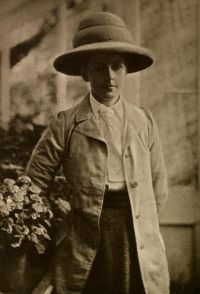
Portrait of Isabel Savory Isabel Savory In the Tail of the Peacock

It is a vast city—other writers have chronicled the number of square miles which it accounts for—and yet, in spite of its size, the sum-total of souls it contains is not overwhelming. There are gardens everywhere, stretch after stretch of palm-trees, acre after acre of fruit-trees, and wedged among them all, lie the flat roofs, swarm the endless throng which spells humanity; and the oddest, most varied humanity—Arabs and negroes, men from the Sus, from the Sahara, from Draa, Berber hillmen, tribesmen from the Atlas, a tumultuous multitude, a hive of bees of whom no census has ever been made.
Source: Gutenberg

Portrait of Isabel Savory Isabel Savory In the Tail of the Peacock

The hot desert wind in Mogador showed no signs of changing: there was no enlivening sun, and the sad white seaport could only charm in a morbid manner: to be out under the skies, in the open, away from the city and sealed houses and the eyes, was a thing to be sought after, and that quickly. Southern Morocco is like the East in that it is all eyes. The watchful East—it may be lazy, but nothing escapes its eyes. They gleam between the folds of the veil; they look from out of a smooth face, mild and yet as little to be read as the deep sea.
Source: Gutenberg

Portrait of Isabel Savory Isabel Savory In the Tail of the Peacock

Bay, is the colour which in a horse the Moor chooses first—the pearl of colours, sober and most hardy; while a light chestnut brings ill luck, though a dark chestnut is the colour of the wind, can "travel," and was Mohammed's favourite. A horse must have the colour of its saddle in harmony with itself—an apple-green saddle for a black horse, scarlet for a white, the whole beautifully worked and embossed in silk, and when on the horse's back, should be set, perhaps, upon as many as nine different coloured saddle-cloths, one on top of each other.
Source: Gutenberg

Get perspective with Kwize: daily news enlightened by great literature