Summary

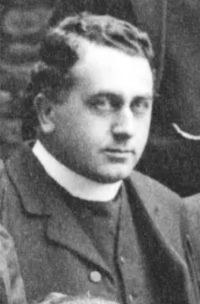
Portrait of De Lacy O'Leary De Lacy O'Leary Arabic Thought and Its Place in History… (1922)

It is the end of all philosophy to know this first Cause, which is God, because as He is the cause of all, all can be understood and explained by understanding and knowing Him. That the first Cause is single and one and the cause of all agrees with the teaching of the Qur'an, and al-Farabi freely uses Qur'anic phraseology in perfect good faith, supposing that the Aristotelian doctrine corroborates the doctrine of the Qur'an.
Source: Wikisource

Portrait of De Lacy O'Leary De Lacy O'Leary Arabic Thought and Its Place in History… (1922)

It is this spirit, the rational soul which has entered from outside and exists in man alone, which is immortal. Such a doctrine sets an impassible gulf between man and the rest of creation, and explains why it is impossible for those whose thought is formed on Aristotelian lines, whether in orthodox Islam or in the Catholic Church, to admit the "rights" of animals, although ready to regard benevolent action towards them as a duty.
Source: Wikisource

Portrait of De Lacy O'Leary De Lacy O'Leary Arabic Thought and Its Place in History… (1922)

Thus the scholastic theologians, both of Islam and of Latin Christianity, attack the philosophers as undermining belief in individual personality and in opposing the doctrine of the resurrection, and in this latter, it must be remembered, Muslim doctrine is committed to cruder details than prevail in Christianity. But al-Farabi did not see where the Aristotelian teaching would lead him: to him Aristotle seemed orthodox because his doctrines seemed to prove the immortality of the soul.
Source: Wikisource

Get perspective with Kwize: daily news enlightened by great literature