Summary

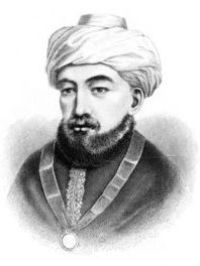
Portrait of Maimonides Maimonides Eight chapters of Maimonides on Ethics (1912)

When Moses, our teacher, discovered that there remained no partition between himself and God which he had not removed, and when he had attained perfection by acquiring every possible moral and mental virtue, he sought to comprehend God in His true reality, since there seemed no longer to be any hindrance thereto. He, therefore, implored of God, "Show me, I beseech Thee, Thy glory". [20] But God informed him that this was impossible, as his intellect, since he was a human being, was still influenced by matter. So, God's answer was, "For no man can see me and live".
Source: Wikisource

Portrait of Maimonides Maimonides Eight chapters of Maimonides on Ethics (1912)

It often happens, however, that men err as regards these qualities, imagining that one of the extremes is good, and is a virtue. Sometimes, the extreme of the too much is considered noble, as when temerity is made a virtue, and those who recklessly risk their lives are hailed as heroes. Thus, when people see a man, reckless to the highest degree, who runs deliberately into danger, intentionally tempting death, and escaping only by mere chance, they laud such a one to the skies, and say that he is a hero.
Source: Wikisource

Portrait of Maimonides Maimonides Eight chapters of Maimonides on Ethics (1912)

Therefore, just as the physician, who endeavors to cure the human body, must have a perfect knowledge of it in its entirety and its individual parts, just as he must know what causes sickness that it may be avoided, and must also be acquainted with the means by which a patient may be cured, so, likewise, he who tries to cure the soul, wishing to improve the moral qualities, must have a knowledge of the soul in its totality and its parts, must know how to prevent it from becoming diseased, and how to maintain its health.
Source: Wikisource

Get perspective with Kwize: daily news enlightened by great literature