The Rig Veda (1896)
“ Sages well-skilled in work, intelligent, drain out the stalk that roars, the Sage, the Everlasting One. The milk, the hymns unite them with him in the place of sacrifice, his seat who is produced anew. ”
The sage, in classical philosophy, is an individual who embodies wisdom, often seen as an ideal of moral and intellectual perfection. From Plato’s claim that the sage already possesses wisdom, unlike the philosopher who searches for it, to Epicurean ideas of peace through disengagement from worldly matters, the concept has developed across different traditions. Stoics imagined the sage as a model of virtue, unaffected by external conditions, while Rabelais connected sagehood with divine direction and human endeavor.
Omar Khayyam, on the other hand, questioned the effectiveness of sages’ teachings. These differing viewpoints—from Platonic transcendence to Stoic disengagement—highlight the sage’s lasting role as a symbol of the quest for wisdom and its practical or metaphysical consequences. The combination of these perspectives emphasizes the sage as both a human ideal and a reflection of cosmic order, linking philosophical exploration with ethical life.
The Rig Veda (1896)
“ Sages well-skilled in work, intelligent, drain out the stalk that roars, the Sage, the Everlasting One. The milk, the hymns unite them with him in the place of sacrifice, his seat who is produced anew. ”
The Rig Veda — Mandala 3, Hymn 38 (1896)
“ HASTING like some strong courser good at drawing, a thought have I imagined like a workman. Pondering what is dearest and most noble, I long to see the sages full of wisdom. 2. Ask of the sages' mighty generations firm-minded and devout they framed the heaven. ”
 Matthew Fontaine Maury,
Address Before The Literary Societies of the University of Virginia
(1855)
Matthew Fontaine Maury,
Address Before The Literary Societies of the University of Virginia
(1855)
“ They have reared the most glorious fabric that the wisdom of sages has ever conceived, and they have set it up here, a light to the whole world, and an asylum to the down-trodden and oppressed of every land. ”
 Thomas Davidson,
Aristotle and Ancient Educational Ideals
Thomas Davidson,
Aristotle and Ancient Educational Ideals
“ How does a man [135] become a sage? (2) How can the sage organize human life, and secure a succession of sages to continue his work after him? To the first of these questions, dialectics gives the answer; to the second, practics; while theoretics exhibits to us at once the origin and the end, that is, the meaning, of all existence, the human included. ”
 J. A. Giles,
Six Old English Chronicles
(1848)
J. A. Giles,
Six Old English Chronicles
(1848)
“ For wisdom shall decay and fall away from her wise men, and the understanding of her sages shall be concealed. Woe be unto you that are profound in heart, to conceal counsel from our Lord, whose works are in darkness, and they say, who seeth us? And who hath known us? ”
Leonard Huxley, Thomas Henry Huxley: A Character Sketch
“ The creeds of ancient sages, the dogmas of more modern date, must equally bear the light of widening knowledge and the tests that prove the gold or clay of their foundations, the stability of the successive steps by which they proceed. ”
 François Rabelais,
Gargantua and Pantagruel
(1534)
François Rabelais,
Gargantua and Pantagruel
(1534)
“ For all the ancient philosophers and sages have held two things necessary safely and pleasantly to arrive at the knowledge of God and true wisdom; first, God’s gracious guidance, then man’s assistance. ”
 Omar Khayyam,
Rubáiyát of Omar Khayyam, Rendered into English Verse
Omar Khayyam,
Rubáiyát of Omar Khayyam, Rendered into English Verse
“ Why, all the Saints and Sages who discuss'd Of the Two Worlds so wisely—they are thrust Like foolish Prophets forth; their Words to Scorn Are scatter'd, and their Mouths are stopt with Dust. ”
 Philip Schaff,
Nicene and Post-Nicene Fathers…
(1885)
Philip Schaff,
Nicene and Post-Nicene Fathers…
(1885)
“ But having examined a great number of passages from the Holy Scriptures, I find it written in the Book of Job, that holy man being the speaker, “Behold, piety, that is wisdom; but to depart from evil is knowledge.” [4] In thus distinguishing, it must be understood that wisdom belongs to contemplation, knowledge to action. ”
The Rig Veda (1896)
“ Acting the Sage, he flows enrobed in waters and song as 'twere a stall that kine may prosper. 2. The worlds expand to him who from aforetime found light to spread the law of life eternal. The swelling songs, like kine within the stable, in deep devotion call aloud on Indu. 3. When the sage bears his holy wisdom round him, like a car visiting all worlds, the Hero, Becoming fame, mid Gods, unto the mortal, wealth to the skilled, worth praise mid the Ever-present, 4. For glory born be hath come forth to glory: he giveth life and glory to the singers. They, clothed in glory, have become immortal. ”
 Samuel Taylor Coleridge,
Anima Poetæ
Samuel Taylor Coleridge,
Anima Poetæ
“ A "myriad-minded" sage, who has seen men and cities, who has read widely and shaped his thoughts in a peculiar mould, is pouring out his stores of knowledge, the garnered fruit of a life of study and meditation, for the benefit of an apt learner, a discreet and appreciative disciple. ”
“ Nay, whatsoever proceedeth from these Mines of divine Wisdom and these Treasuries of eternal knowledge is truth, and naught else but the truth. The saying: “Knowledge is one point, which the foolish have multiplied” is a proof of Our argument, and the tradition: “Knowledge is a light which God sheddeth into the heart of whomsoever He willeth” a confirmation of Our statement. ”
St. George William Joseph Stock, A Guide to Stoicism
“ The sage alone could act rightly, but other people might perform "the proprieties." Any one might honor his parents, but the sage alone did it as the outcome of wisdom, because he alone possessed the art of life, the peculiar work of which was to do everything that was done as the result of the best disposition. ”
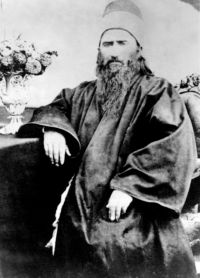 Bahá'u'lláh,
The Book of Ighan
(1915)
Bahá'u'lláh,
The Book of Ighan
(1915)
“ Shouldst thou make the mirror of heart pure and clear from the dust of prejudice, thou wilt comprehend all the symbols in the sayings of the perfect Word of Divinity in every Manifestation and be informed of the mysteries of Knowledge. But unless thou destroyest with the fire of Severance the veils of learning which are conventional among the servants, thou wilt not attain to the brilliant morn of the Ideal Knowledge. ”
“ O let us be graciously endowed by Thee with knowledge, understanding, and discernment. Blessed art Thou, O Lord, gracious Giver of Knowledge.' The intellect was to be turned to the service of the God from whom intelligence emanated. ”
 Origen,
The writings of Origen, Vol. 1…
(1869)
Origen,
The writings of Origen, Vol. 1…
(1869)
“ Let us apply this now to the case of those who have devoted themselves to the knowledge and wisdom of God, whose learning and diligence incomparably surpass all other training; and let us contemplate, according to the form of the similitude employed, what is the acquisition of knowledge, or what is its disappearance, especially when we hear from the apostle what is said of those who are perfect, that they shall behold face to face the glory of the Lord in the revelation of His mysteries. ”
Thomas Brown, Lectures on the Philosophy of the Human Mind…
“ The sage, who in the silence of midnight, continues still those labours which the morning began, watching, with sleepless eye, the fate of some experiment, that almost promises to place within his hand the invisible thread, which leads into the labyrinths of nature, or exploring those secrets of the mind itself, by the aid of which he is afterwards to lay down rules of more accurate philosophizing, and to become the legislator of all who think, is not cheered, in his toils, merely by occasional anticipations of the truths that await his search. ”
Bahá'u'lláh,
The Book of Ighan
(1915)
“ Please God, thou shouldst purify the eye of heart from the beckonings of water and clay, that thou mayest comprehend the infinite degrees of Knowledge and realize that God is too manifest for thee to cling to any evidence or need any proof to demonstrate His Being. ”
Origen,
The writings of Origen, Vol. 1…
(1869)
“ Those, again, who are perfect, and who resemble those of whom the apostle says, “We speak wisdom among them that are perfect, but not the wisdom of this world, nor of the princes of this world, who will be brought to nought; but we speak the wisdom of God, hidden in a mystery, which God hath decreed before the ages unto our glory;” ”
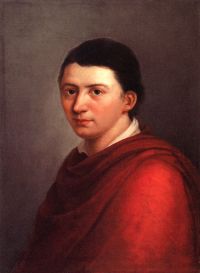 Friedrich von Schlegel,
The philosophy of life, and philosophy of language…
Friedrich von Schlegel,
The philosophy of life, and philosophy of language…
“ I observe, then, first of all, that when we speak of sense, soul, and spirit, as the successive terms in the growing capacity of the human consciousness for a higher knowledge and heavenly training, and for truth in general, but more especially for divine truth, then the general sense of truth, which such an hypothesis supposes, and which indeed is its essential foundation, must be understood as comprising all those other particular species, branches, or departments which we have already enumerated. ”
W. Sedgwick Saunders, Sketches from the history of medicine… (1868)
“ It has been urged by way of apology for the mystery in which the philosophers shrouded their wisdom, that “science, like modesty, should cover itself with a veil to increase the charms of the treasure it conceals;” ”
Matthew Henry, Commentary on the Whole Bible… (1700s)
“ Those that prudently seek knowledge shall certainly get knowledge, for God never said to such, Seek in vain, but, Seek and you shall find. If the ear seeks it, the heart gets it, and keeps it, and is enriched by it. We must get knowledge, not only into our heads, but into our hearts, get the savour and relish of it, apply what we know to ourselves and experience the power and influence of it. ”
 Mary Baker G. Eddy,
Science and Health with Key to the Scriptures
(1889)
Mary Baker G. Eddy,
Science and Health with Key to the Scriptures
(1889)
“ I try to leave on every student's mind the impress of Divine Science, — a high sense of the moral and spiritual qualifications requisite for healing, well knowing it to be impossible for error and hate to accomplish the grand results of Truth and Love. ”
Sharaf al-Din Ahmad ibn Yahya Maniri, Letters from a Sûfî Teacher
“ True Knowledge is that which leads to the Divine Sanctuary, not that which leads to wealth, rank and passional gratifications." The company of a Sage for a day is more conducive to progress than purification and asceticism.—Letter 55. ”
 Benjamin Fiske Barrett,
Heaven Revealed
(1885)
Benjamin Fiske Barrett,
Heaven Revealed
(1885)
“ Scripture, reason, analogy, observation, history, individual experience, well-authenticated facts, the principles of sound philosophy, the known laws of our mental and moral constitution, the wisdom and beneficence of God as revealed in his Word and works and in the wondrous ways of his Providence—these are the witnesses which are confidently appealed to. ”
Joseph Wilhelm, A Manual Of Catholic Theology (1906)
“ Revelation, then, contemplated and transmitted in exactness and method, may be called a science and the queen of sciences, the chief of the hierarchy of truth; and it enters and takes the first place in the intellectual system and tradition of the world. It possesses all the qualities and conditions of science so far as its subject-matter admits ”
The Bible, Douay-Rheims, Complete
“ My son, if thou wilt attend to me, thou shalt learn: and if thou wilt apply thy mind, thou shalt be wise.6:34. If thou wilt incline thy ear, thou shalt receive instruction: and if thou love to hear, thou shalt be wise.6:35. Stand in the multitude of ancients that are wise, and join thyself from thy heart to their wisdom, that thou mayst hear every discourse of God, and the sayings of praise may not escape thee.6:36. And if thou see a man of understanding, go to him early in the morning, and let thy foot wear the steps of his doors. ”
Mary Baker G. Eddy,
Science and Health with Key to the Scriptures
(1898)
“ Only by the illumination of the spiritual sense, can the light of understanding be thrown upon this Science, because it reverses the evidence before the material senses, and furnishes the eternal interpretation of God and man. ”
William James, The Varieties of Religious Experience (1902)
“ If the inquiry be psychological, not religious institutions, but rather religious feelings and religious impulses must be its subject, and I must confine myself to those more developed subjective phenomena recorded in literature produced by articulate and fully self-conscious men, in works of piety and autobiography. Interesting as the origins and early stages of a subject always are, yet when one seeks earnestly for its full significance, one must always look to its more completely evolved and perfect forms. ”
 Isaac of Nineveh,
Mystic Treatises
(1923)
Isaac of Nineveh,
Mystic Treatises
(1923)
“ Do not in the way of those who are educated by teachers look at the words which in the way of test, are intended to elevate thy behaviour, in order that thy soul may be elevated by the height of sight that is in them. Distinguish the purport of the word in all the stories thou findest in the scriptures; so thou wilt be able to make thy soul deep so that it may dwell with the great wisdom that is in the waitings of enlightened men. ”
by Thomas Taylor, A Dissertation on the Eleusinian and Bacchic Mysteries (1791)
“ The nous, intellect or spirit, pertains to the higher or intuitional part of the mind; the dianoia or understanding to the reasoning faculty, and the doxa, or opinion-forming power, to the faculty of investigation.—Plotinus, accepting this theory of mind, says: “Knowledge has three degrees—opinion, science, and illumination. ”
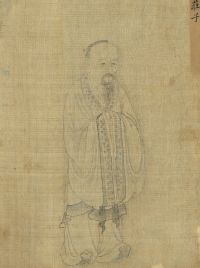 Zhuang Zi,
Chuang Tzŭ
(1889)
Zhuang Zi,
Chuang Tzŭ
(1889)
“ The Sage too has a source from which the nourishment of his soul is supplied. "The relation between water and earth is determinate. The relation between a man and his shadow is determinate. The relation between thing and thing is determinate. ”
 Mary Baker Eddy,
Science and Health with Key to the Scriptures
(1906)
Mary Baker Eddy,
Science and Health with Key to the Scriptures
(1906)
“ The illuminations of Science give us a sense of the nothingness of error, and they show the spiritual inspiration of Love and Truth to be the only fit preparation for admission to the presence and power of the Most High. ”
Paul Ambroise Bigandet, The Life or Legend of Gaudama, the Buddha of the Burmese…
“ To the sage that has already begun the laborious task of investigating truth, such practices are of no use, and are nowhere insisted on as necessary, or even useful. In the book of discipline, no mention is made of them. ”
 Charles Kingsley,
The Good News of God
Charles Kingsley,
The Good News of God
“ If thou incline thine ear to wisdom, and apply thine heart to understanding; yea, if thou criest after wisdom, and liftest up thy voice for understanding; then shalt thou understand the fear of the Lord, and find the knowledge of God. ”
“ And there among the rugged rocks abides an ancient Sage,— An earnest Man, who reads all day a most perplexing page. Climb up, and seize him by the toes,—all studious as he sits,— And pull him down, and chop him into endless little bits! ”
Matthew Henry, Commentary on the Whole Bible… (1700s)
“ Settle it therefore in your hearts that the day of the Lord will certainly come, and you shall certainly be called to give an account of all things done in the body, whether good or evil; and let your exact walking before God, and your frequent judging yourselves, evidence your firm belief of a future judgment, when many live as if they were never to give any account at all. ”
Helen A. Clarke, Browning and His Century
“ There is nothing here more reassuring than a statement made by the sage, based upon no argument, nor revelation, nor intuition—nothing but the utilitarian doctrine that it will be wiser to cling to Faith beyond Faith! ”
Matthew Henry, Commentary on the Whole Bible… (1700s)
“ Though you are ever so simple, Wisdom will take you for her scholars, and not only so, but, if you will be ruled by her, will undertake to give you an understanding heart." When sinners leave their sins, and become truly religious, then the simple understand wisdom. ”
Christian D. Larson, The Pathway of Roses (1913)
“ To train the mind to think the real truth about man, statements of truth, of every possible description, should be employed extensively. In brief, the mind should be daily drilled, in the thinking of absolute truth; that is, the mental or verbal expression of statements of truth; and to enter into the spiritual understanding of the real significance of every statement should be the central purpose in view. ”
 John of the Cross,
Ascent of Mount Carmel
John of the Cross,
Ascent of Mount Carmel
“ It must be known, then, that, speaking broadly and in general terms, all these four apprehensions may be called visions of the soul; for we term the understanding of the soul also its sight. And since all these apprehensions are intelligible to the understanding, they are described, in a spiritual sense, as ‘visible.’ And thus the kinds of intelligence that are formed in the understanding may be called intellectual visions. ”
Mary Baker Eddy,
Science and Health with Key to the Scriptures
(1906)
“ The representatives of Soul, not corporeal sense; the offspring of Spirit, who, having wrestled with error, sin, and sense, are governed by divine Science; some of the ideas of God beheld as men, casting out error and healing the sick ”
 Ralph Waldo Emerson,
Miscellanies
(1855)
Ralph Waldo Emerson,
Miscellanies
(1855)
“ Could we indicate the indicators, indicate those who most accurately represent every good and evil tendency of the general mind, in the just order which they take on this canvass of Time; so that all witnesses should recognise a spiritual law, as each well known form flitted for a moment across the wall, we should have a series of sketches which would report to the next ages the color and quality of ours. ”
“ They may study the world in which they are placed, with the light which can be thrown upon it by the book which they call the Word of God. They may form their conclusions, invent their schemes of doctrine, and commend to their flocks the interpretation of the mystery at which they have arrived. ”
Bishop of Hippo Saint Augustine, The Confessions of St. Augustine
“ Thou the sense of his body, whereby, as by an interpreter, he may from mind to matter, convey that which he doth, and report to his mind what is done; that it within may consult the truth, which presideth over itself, whether it be well done or no. ”
Mary Baker G. Eddy,
Science and Health
(1881)
“ The various opinions and beliefs of mortal man, culminating in dogma, doctrine, and theory, among which are materia medica, physiology, hygiene, etc., are predicated of matter, and afford not a single idea of God, Truth. ”
Matthew Henry, Commentary on the Whole Bible… (1700s)
“ Now give any evidence of having the faith thou professest without works if thou canst, and I will soon let thee see how my works flow from faith and are the undoubted evidences of its existence." This is the evidence by which the scriptures all along teach men to judge both of themselves and others. ”