Summary

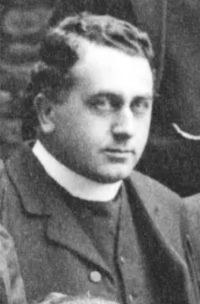
Portrait of De Lacy O'Leary De Lacy O'Leary Arabic Thought and Its Place in History… (1922)

The popular beliefs he does not accept, but he regards them as wisely designed to teach morality and to develop piety amongst the people at large; the true philosopher allows no word to be uttered against established religion, which is a thing necessary for the welfare of the people. Aristotle he regards as the supreme revelation of God to man: with it religion is in total agreement, but as religion is known to the multitude it only partially discloses Divine truth and adapts it to the practical needs of the many
Source: Wikisource

Portrait of De Lacy O'Leary De Lacy O'Leary Arabic Thought and Its Place in History… (1922)

By this time, some three-quarters of a century after the death of Ibn Sina, Arabic philosophy was almost extinct in Asia and was treated as a dangerous heresy. In Egypt, it is true, there was a greater degree of toleration, though less than in the golden age of the Fatimids, but Egypt was regarded with suspicion as the home of heresy and of forms of superstition which were uncongenial to the philosopher. Spain thus becomes the place of refuge for Muslim philosophy as it had already become the nursery of Jewish speculation.
Source: Wikisource

Portrait of De Lacy O'Leary De Lacy O'Leary Arabic Thought and Its Place in History… (1922)

He maintained that the task of philosophy was one approved and commended by religion, for the Qur'an shows that God commands men to search for the truth. It is only the prejudice of the unenlightened which fears freedom of thought, because for those whose knowledge is imperfect the truths of philosophy seem to be contrary to religion.
Source: Wikisource

Get perspective with Kwize: daily news enlightened by great literature