Summary

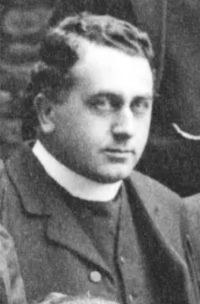
Portrait of De Lacy O'Leary De Lacy O'Leary Arabic Thought and Its Place in History… (1922)

Al-Ghazali, following al-Ash'ari, taught that philosophical theory cannot form the basis of religious thought, thus opposing the position of the philosophers. By revelation only can the primary essentials of truth be attained. Philosophy itself is no equal or rival of revelation: it is no more than common sense and regulated thinking, which may be employed by men about religion or any other subject
Source: Wikisource

Portrait of De Lacy O'Leary De Lacy O'Leary Arabic Thought and Its Place in History… (1922)

He agrees with al-Ash'ari in holding that the world and all it contains have been created by God from nothing: it consists of substances and attributes. The substances exist in themselves, either as compounds, such as bodies, or as non-compounds, as essences which are indivisible. Attributes have no separate existence, but depend for their existence on bodies or essences. God is not essence, nor attribute, nor body, nor anything formed, bounded, numbered, limited, nor compounded.
Source: Wikisource

Portrait of De Lacy O'Leary De Lacy O'Leary Arabic Thought and Its Place in History… (1922)

Thus, that God has power and wisdom means that He is almighty and omniscient in a way which could not possibly be stated of any men. In practice this works so that no attribute can be applied to God unless it is expressly so applied in the text of the Qur'an; if it occurs there it may be used, but must be understood as having a meaning other than such a term would have when used in the normal way of men. It cannot be that God's attributes differ from those of men only in degree, as that He is wiser and more powerful than man, but they differ in their whole nature.
Source: Wikisource

Get perspective with Kwize: daily news enlightened by great literature