Summary

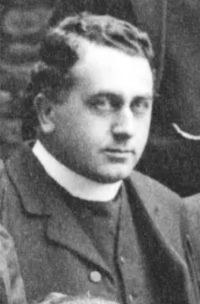
Portrait of De Lacy O'Leary De Lacy O'Leary Arabic Thought and Its Place in History… (1922)

Infants cannot be condemned to eternal punishment because they have no responsibility, having never exercised free will. Unbelievers, however, are condemned to punishment because, although they have not the help of revelation, it is possible for them to know that there must be a God, and only one God, by the light of reason. In dealing with actions and their moral values we have to consider not only one agent and one object, but often a series, the act being transmitted from one to the other so that each of the intervening objects becomes the agent to the next object.
Source: Wikisource

Portrait of De Lacy O'Leary De Lacy O'Leary Arabic Thought and Its Place in History… (1922)

In man the inner volition is free, but the outer acts are not free; sometimes they are controlled by external forces in the body, or even outside the body, and sometimes they are controlled by the inner volition. Aristotle speaks of the universe as existing from eternity, but the Qur'an refers to its creation, yet these are not inconsistent: we must suppose that it existed eternally, but in perfect quiescence and stillness, as it were latent and potential rather than actual, and without those qualities which appear in the categories of logic and are to us the only known terms of existence.
Source: Wikisource

Get perspective with Kwize: daily news enlightened by great literature