Greek philosophy

Definition and stakes

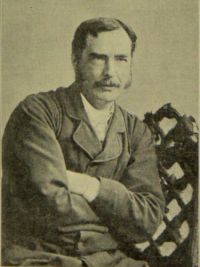
Portrait of Robert Matteson Johnston Robert Matteson Johnston The Harvard Classics Vol. 51 (1914)

Greek philosophy was to prove the greatest intellectual asset of humanity. No other civilization or language before the Greek had invented the abstract ideas: time, will, space, beauty, truth, and the others. And from these wonderful, though imperfect, word ideas the vigorous and subtle Greek intellect rapidly raised a structure which found its supreme expression in Plato, Aristotle, and Zeno. But from the close of the Fourth Century before Christ, the time of Aristotle and his pupil Alexander the Great, Greek began to lose its vitality and to decay.
Source: Wikisource

The Legacy of Greece

But on the whole, putting aside for the moment the possible inadequacies of translation, Greek philosophy speaks straight to any human being who is willing to think simply, Greek art and poetry to any one who can use his imagination and enjoy beauty. He has not to put on the fetters or the blinkers of any new system in order to understand them; he has only to get rid of his own—a much more profitable and less troublesome task.
Source: Gutenberg

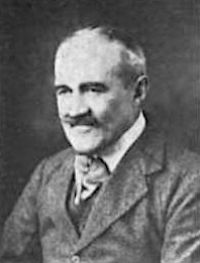
W. T. Stace A critical history of Greek philosophy

Greek philosophy is not, even now, antiquated. It is not from the point of view of an antiquary or historian {vi} that its treasures are valuable. We are dealing here with living things, and not with mere dead things--not with the dry bones and debris of a bygone age. And I have tried to lecture and write for living people, and not for mere fossil-grubbers. If I did not believe that there is to be found here, in Greek philosophy, at least a measure of the truth, the truth that does not grow old, I would not waste five minutes of my life upon it.
Source: Gutenberg

Get perspective with Kwize: daily news enlightened by great literature