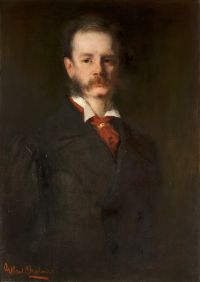
John Batty Tuke

John Batty Tuke

Summary

Portrait of John Batty Tuke John Batty Tuke 1911 Encyclopædia Britannica (1911)

But when we come to study his observations on the natural history of disease as presented in the living subject, we recognize at once the presence of a great clinical physician. Hippocrates based his principles and practice on the theory of the existence of a spiritual restoring essence or principle, φύσις, the vis medicatrix naturae, in the management of which the art of the physician consisted. This art could, he held, be only obtained by the application of experience, not only to disease at large, but to disease in the individual.
Source: Wikisource

Portrait of John Batty Tuke John Batty Tuke 1911 Encyclopædia Britannica (1911)

The veneration in which he was held by the Athenians serves to dissipate the calumnies which have been thrown on his character by Andreas, and the whole tone of his writings bespeaks a man of the highest integrity and purest morality.
Born of a family of priest-physicians, and inheriting all its traditions and prejudices, Hippocrates was the first to cast superstition aside, and to base the practice of medicine on the principles of inductive philosophy.
Source: Wikisource

Portrait of John Batty Tuke John Batty Tuke 1911 Encyclopædia Britannica (1911)

The power of graphic description of phenomena in the Hippocratic writings is illustrated by the retention of the term “facies Hippocratica,” applied to the appearance of a moribund person, pictured in the Prognostics. In surgery his writings are important and interesting, but they do not bear the same character of caution as the treatises on medicine; for instance, in the essay On Injuries of the Head, he advocates the operation “of trephining” more strongly and in wider classes of cases than would be warranted by the experience of later times.
Source: Wikisource

Get perspective with Kwize: daily news enlightened by great literature