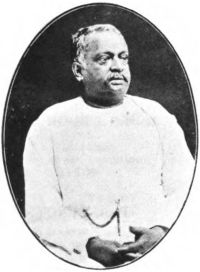
Udoy Chand Dutt

Udoy Chand Dutt

Summary

Portrait of Udoy Chand Dutt Udoy Chand Dutt The materia medica of the Hindus (1877)

In detailing the uses of particular combinations of medicines, Sanskrit writers are, sometimes, in the habit of indulging in exaggerated statements. Thus for example a medicine, which is really used in a special disease, say jaundice, is described in the chapter devoted to the treatment of this disease, but a host of other diseases may also be recited as cured by it. Native physicians who regard these writings as sacred, explain these irrelevant statements by saying that they are secondary uses.
Source: Wikisource

Portrait of Udoy Chand Dutt Udoy Chand Dutt The materia medica of the Hindus (1877)

If therefore we leave out of consideration the Uttara-tantra of Susruta, the work resolves itself mainly into a treatise on the principles of medicine as bearing on surgical diseases. It would thus appear that from a very early age, Hindu medical practitioners were divided into two classes, namely, Salya chikitsaka or surgeons and Káyachikitsaka or physicians. The surgeons were also called Dhanvantaryia sampradáya after Dhanvantari the reputed teacher of Susruta, or from Dhanvantari the mythological surgeon of the gods.
Source: Wikisource

Portrait of Udoy Chand Dutt Udoy Chand Dutt The materia medica of the Hindus (1877)

Native physicians learn these synonyms by rote, just as they do their grammars and dictionaries. Sanskrit medical works, like most other works in the language, are composed in rhyme, and any one of the numerous synonyms of a drug may be used to designate it in prescriptions containing the article according to the fancy of the writer and the necessities of metrical composition. Many names again are common to numerous articles, and it is often impossible without the help of annotations to make out which drug is meant by a particular term.
Source: Wikisource

Get perspective with Kwize: daily news enlightened by great literature