Spectroscopy

Definition and stakes

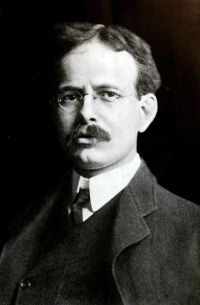
Franz Arthur Friedrich Schuster,  Popular Science Monthly (1881)

“ What I have ventured to call modern spectroscopy is the union of the old science with the modern ideas of the dynamical theory of gases, and includes the application of the spectroscope to the experimental investigation of molecular phenomena, which without it might for ever remain matters of speculation or of calculation.
A body, then, is made up of a number of atoms. These are hardly ever, perhaps never, found in isolation. Two or more of them are bound together, and do not part company as long as the physical state of the body remains the same.
”
Source: Wikisource

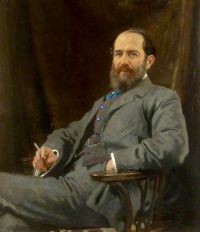
J. Arthur Thomson,  The Outline of Science, Vol. 1…

“ The spectrum emitted by a substance is influenced by a variety of conditions. The pressure, the temperature, the state of motion of the object we are observing, all make a difference, and one of the most laborious tasks of the modern spectroscopist is to disentangle these effects from one another. Simple as it is in its broad outlines, spectroscopy is, in reality, one of the most intricate branches of modern science. ”
Source: Gutenberg

Various,  The Scientific Monthly, October to December…

“ Let us consider the fundamental principles of spectroscopy.
1. When a solid body, a liquid, or a highly-condensed gas is heated to incandescence, its light when passed through a spectroscope forms a continuous spectrum: that is, a band of light, red at one end and violet at the other, uninterrupted by either dark or bright lines.
2. The light from the incandescent gas or vapor of a chemical element, passed through a spectroscope, forms a bright-line spectrum
”
Source: Gutenberg

Get perspective with Kwize: daily news enlightened by great literature