Photosphere

Definition and stakes

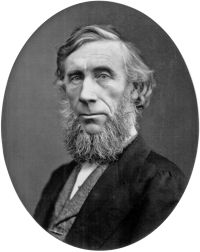
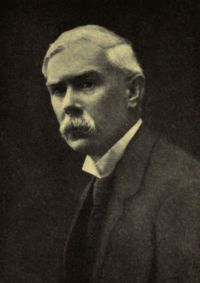
Portrait of John Arthur Thomson John Arthur Thomson,  The Outline of Science — Part I

“ Here let us return to and see what more we know about the photosphere--the sun's surface. It is from the photosphere that we have gained most of our knowledge of the composition of the sun, which is believed not to be a solid body. Examination of the photosphere shows that the outer surface is never at rest. Small bright cloudlets come and go in rapid succession, giving the surface, through contrasts in luminosity, a granular appearance. ”
Source: Wikisource

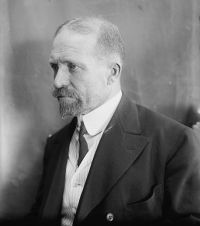
Florence Armstrong Grondal,  The music of the spheres (1926)

“ The bright yellow surface of the sun which every one sees, is called the photosphere or light-sphere. If strongly magnified through a telescope, this surface is seen to have a decided "mottled" appearance, like a layer of little clouds with dark spaces between, spread over the whole face of the sun. ”
Source: Gutenberg

Thomas Nathaniel Orchard,  The Astronomy of Milton's 'Paradise Lost'

“ It is most brilliant at the centre of the Sun, and diminishes in brightness towards the circumference, where its luminosity is but one-fourth that of the central portion of the disc. The photosphere consists of gaseous vapours or clouds, of irregular form and size, separated by less brilliant interstices, and glowing white with the heat derived from the interior of the Sun. In the telescope the photosphere is not of uniform brilliancy, but presents a mottled or granular appearance, an effect created by the intermixture of spaces of unequal brightness. ”
Source: Gutenberg

Get perspective with Kwize: daily news enlightened by great literature