Summary

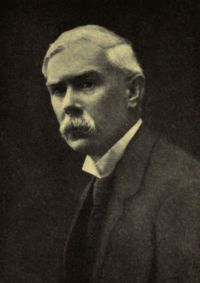
Portrait of John Arthur Thomson John Arthur Thomson The Outline of Science — Part I

What is the duration of the universe in time? Is it fitted to last for ever in its present form, or does it contain within itself the seeds of dissolution? Must it, in the course of time, in we know not how many millions of ages, be transformed into something very different from what it now is? This question is intimately associated with the question whether the stars form a system.
Source: Wikisource

Portrait of John Arthur Thomson John Arthur Thomson The Outline of Science — Part I

This immense column of red-hot gas, four or five times the thickness of the earth, was soaring upward at the rate of 60,000 miles an hour.
These flaming jets or prominences shooting out from the chromosphere are not to be seen every day by the naked eye; the dazzling light of the sun obscures them, gigantic as they are. They can be observed, however, by the spectroscope any day, and they are visible to us for a very short time during an eclipse of the sun.
Source: Wikisource

Portrait of John Arthur Thomson John Arthur Thomson The Outline of Science — Part I

We must imagine the colony of planets to which we belong as a compact little family swimming in an immense void. At distances which would take our shell, not hundreds, but millions of years to traverse, we reach the stars--or rather, a star, for the distances between stars are as great as the distance between the nearest of them and our Sun. The Earth, the planet on which we live, is a mighty globe bounded by a crust of rock many miles in thickness
Source: Wikisource

Get perspective with Kwize: daily news enlightened by great literature