Summary

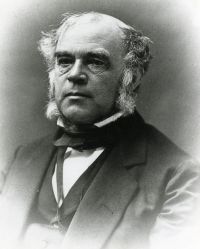
Portrait of John William Draper John William Draper History of the Conflict Between Religion and Science… (1874)

In thus denouncing the Copernican system as being in contradiction to revelation, the ecclesiastical authorities were doubtless deeply moved by inferential considerations. To dethrone the earth from her central dominating position, to give her many equals and not a few superiors, seemed to diminish her claims upon the Divine regard. If each of the countless myriads of stars was a sun, surrounded by revolving globes, peopled with responsible beings like ourselves, if we had fallen so easily and had been redeemed at so stupendous a price as the death of the Son of God, how was it with them?
Source: Wikisource

Portrait of John William Draper John William Draper History of the Conflict Between Religion and Science… (1874)

This distance once determined, the dimensions of the solar system may be ascertained with ease and precision. It is enough to mention that the distance of Neptune from the sun, the most remote of the planets at present known, is about thirty times that of the earth.
By the aid of these numbers we may begin to gain a just appreciation of the doctrine of the human destiny of the universe—the doctrine that all things were made for man. Seen from the sun, the earth dwindles away to a mere speck, a mere dust-mote glistening in his beams.
Source: Wikisource

Portrait of John William Draper John William Draper History of the Conflict Between Religion and Science… (1874)

An uncritical observation of the aspect of Nature persuades us that the earth is an extended level surface which sustains the dome of the sky, a firmament dividing the waters above from the waters beneath; that the heavenly bodies—the sun, the moon, the stars—pursue their way, moving from east to west, their insignificant size and motion round the motionless earth proclaiming their inferiority.
Source: Wikisource

Get perspective with Kwize: daily news enlightened by great literature