John Acton

John Acton

Lectures on Modern History (1906 (this is a 1930 reprint))

Summary

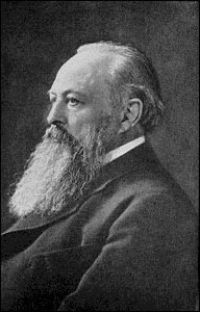
Portrait of John Acton John Acton,  Lectures on Modern History (1906 (this is a 1930 reprint))

“ They thought it unscientific to destroy a real political force. Monarchy, Aristocracy, Prelacy, were things that could be made innocuous, that could be adjusted, limited, and preserved. The very essence of the new Party was compromise. They saw that it is an error to ride a principle to death, to push things to an extreme, to have an eye for one thing only, to prefer abstractions to realities, to disregard practical conditions. ”
Source: Wikisource

Portrait of John Acton John Acton,  Lectures on Modern History (1906 (this is a 1930 reprint))

“ As the Church declined the ancient State appeared, a State which knew no Church, and was the greatest force on earth, bound by no code, a law to itself. As there is no such thing as right, politics are an affair of might, a mere struggle for power. Such was the doctrine which Venice practised, in the interest of a glorious and beneficent government, and which two illustrious writers, Machiavelli and Guicciardini, made the law of modern societies.
The one thing common to the whole Italian Renaissance was the worship of beauty.
”
Source: Wikisource

Portrait of John Acton John Acton,  Lectures on Modern History (1906 (this is a 1930 reprint))

“ The experiment of free government is not one which can be tried once for all. Every generation must try it for itself. As each new generation starts up to the responsibilities of manhood, there is, as it were, a new launch of Liberty, and its voyage of experiment begins afresh.—Winthrop, Addresses, 163. L’histoire perd son véritable caractère du moment que la liberté en a disparu; elle devient une sorte de physique sociale. C’est l’élément personnel de l’histoire qui en fait la réalité.—Vacherot, Revue des Deux Mondes, 1869, iv. ”
Source: Wikisource

Get perspective with Kwize: daily news enlightened by great literature