Summary

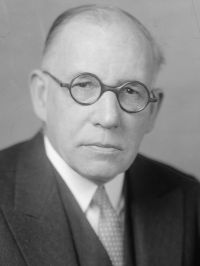
Portrait of Carlton J. H. Hayes Carlton J. H. Hayes A Political and Social History of Modern Europe V.1

Desperately the old order—the old régime—defends itself. First France, then all Europe, is affected. Revolutionary wars convulse the Continent. Never had the world witnessed wars so disastrous, so bloody.
Yet the triumph of the bourgeoisie is not assured. The Revolution has been but one battle in the long war between the rival aristocracies of birth and of business—a war in which peasants and artisans now give their lives for illusory dreams of "Liberty, Equality, Fraternity," now fight their feudal lords, and now turn on their pretended liberators, the bourgeoisie.
Source: Gutenberg

Portrait of Carlton J. H. Hayes Carlton J. H. Hayes A Political and Social History of Modern Europe V.1

One of the most amazing spectacles in history is the expansion of Europe since the sixteenth century. Not resting content with discovering the rest of the world, the European nations with sublime confidence pressed on to divide the new continents among them, to conquer, Christianize, and civilize the natives, and to send out millions of new emigrants to establish beyond the seas a New England, a New France, a New Spain, and a New Netherland.
Source: Gutenberg

Portrait of Carlton J. H. Hayes Carlton J. H. Hayes A Political and Social History of Modern Europe V.1

Thither were drawn the French nobility, who, if shorn of all political power, were now exempted from disagreeable taxes and exalted as essential parts of a magnificent social pageant. The king must have noblemen as valets-de-chambre, as masters of the wardrobe or of the chase or of the revels. Only a nobleman was fit to comb the royal hair or to dry off the king after a bath. The nobles became, like so many chandeliers, mere decorations for the palace. Thus, about Versailles gathered the court of France, and the leaders of fashion met those of brains.
Source: Gutenberg

Get perspective with Kwize: daily news enlightened by great literature