Summary

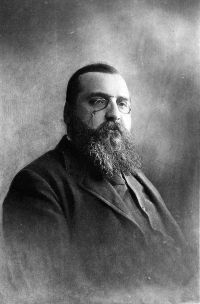
Portrait of H. Morse Stephens H. Morse Stephens Revolutionary Europe, 1789-1815

The Emperor Alexander was no longer his admirer and faithful ally. The vast extension of the Empire had weakened his power, and the French people were beginning to discover how dearly they were paying in the sacrifice of their individual liberty for the glory of one man. His wanton interference in Spain had raised a new force against him in the shape of the resistance of a nation, and had afforded the English an opportunity to meet him on land. In Germany, too, a national spirit was rising, and Prussia, which he had maltreated, was reorganised, and ready to set itself at the head of Germany.
Source: Gutenberg

Portrait of H. Morse Stephens H. Morse Stephens Revolutionary Europe, 1789-1815

It was the principle of nationality which had crippled Napoleon’s finest armies in Spain, and which had produced his expulsion from Russia. It was the feeling of intense national patriotism which had made the Prussian army of 1813, and enabled Prussia after its deepest humiliation to take rank as a first-class power. But the diplomatists at Vienna treated the idea as without force. They had not learnt the great lesson of the French Revolution, that the first result of rousing a national consciousness of political liberty is to create a spirit of national patriotism.
Source: Gutenberg

Portrait of H. Morse Stephens H. Morse Stephens Revolutionary Europe, 1789-1815

By this revolution Bonaparte practically became ruler of France, for Sieyès had no influence with the army, and Roger Ducos no influence with anybody. It was a military revolution like that of the 18th Fructidor; it was a bloodless revolution like that of the 18th Fructidor; but it differed in that, instead of establishing the power of five men, it established the power of one. And that one man was the idol of the army, and generally acknowledged to be the greatest general of France. The preponderance of Bonaparte was quickly recognised by his colleagues.
Source: Gutenberg

Get perspective with Kwize: daily news enlightened by great literature