Summary

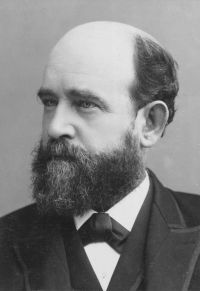
Portrait of Henry George Henry George Progress and Poverty (George)… (1879)

What labour always procures is either wealth, which may or may not be capital, or services, the cases in which nothing is obtained being merely exceptional cases of misadventure. Where the object of labour is simply the gratification of the employer, as where I hire a man to black my boots, I do not pay the wages from capital, but from wealth which I have devoted, not to reproductive uses, but to consumption for my own satisfaction.
Source: Wikisource

Portrait of Henry George Henry George Progress and Poverty (George)… (1879)

Can anything be clearer than that these wages - this oil and bone which the crew of the whaler have taken - have not been drawn from capital, but are really a part of the produce of their labour? Nor is this fact changed or obscured in the slightest degree where, as a matter of convenience, instead of dividing up between the crew their proportion of the oil and bone, the value of each man's share is estimated at the market price, and he is paid for it in money. The money is but the equivalent of the real wages, the oil and bone.
Source: Wikisource

Portrait of Henry George Henry George Progress and Poverty (George)… (1879)

Therefore, the payment of wages presupposes production by labour for which wages are paid. And as the employer generally makes a profit, the payment of wages is, so far as he is concerned, but the return to the labourer of a portion of the wealth he has received from labour. So far as the employee is concerned, it is but the receipt of a portion of the wealth his labour has previously produced. As the value paid in wages is thus exchanged for a value brought into being by labour, how can it be said that wages are advanced by capital?
Source: Wikisource

Get perspective with Kwize: daily news enlightened by great literature