Summary

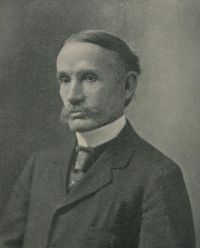
Portrait of John Bates Clark John Bates Clark Essentials of Economic Theory

They move labor from place to place in the system and they transfer capital to and fro in the same way. If we think of our table of groups and subgroups as representing the whole of this great industrial world, we must think of labor and capital as in a perpetual flow from subgroup to subgroup, making some industries larger and others smaller by reason of every such movement. The great force of labor and the fund of capital are like restless seas whose currents carry the water composing them now hither and now yon as the direction and force of the moving influences change.
Source: Gutenberg

Portrait of John Bates Clark John Bates Clark Essentials of Economic Theory

When we know what the rates of wages and interest are, we can tell what any capitalist-manager should have by knowing how much capital he furnishes and how much and how well he works as a manager. If the business is yielding a net profit, over and above the interest on its capital, we can tell what part of this net income any one stockholder will get—in the form of a rate of dividends in excess of the rate of interest—if we know how much of the common stock of the company he owns.
Source: Gutenberg

Portrait of John Bates Clark John Bates Clark Essentials of Economic Theory

If it is barely worth while to go without something now in order to have a dollar and five cents in the future, it is more than worth while to do it in order to have a dollar and a quarter at the same future date. If a man is induced to save only a dollar, for the sake of having a dollar and five cents at the end of the year, why should he not save two dollars, in order to have two dollars and a half at that time? Why should not the amount of his present privation increase, when the surplus of benefit he can gain by it at a future date grows greater?
Source: Gutenberg

Get perspective with Kwize: daily news enlightened by great literature