Equisetum

Definition and stakes

Portrait of A. C. Seward A. C. Seward,  Fossil plants, Vol. 1: [A text-book… (1898)

“ One of the most striking facts to be gleaned from a general survey of the past history of the Equisetaceae is the persistence since the latter part of the Palaeozoic period of that type of plant which is represented by existing Equisetums. There is perhaps no genus in existence which illustrates more vividly than Equisetum the survival of an extremely ancient group, which is represented to-day by numerous and widely spread species. ”
Source: Gutenberg

Gideon Algernon Mantell,  The Medals of Creation, Volumes 1 and 2

“ Equisetaceæ.—The common species of Equisetum, or Marestail, is a plant that grows in marshy tracts, and on the banks of ditches and rivers; it has a jointed stalk, garnished with elegant sheaths which embrace the stem, and verticillate linear leaves: it attains a height of two feet, and is half an inch in diameter. In the fossil state there are many plants allied to the Equisetum, but only a few that are generically the same.
« 105 »
Lign.
”
Source: Gutenberg

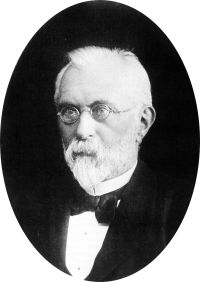
Portrait of Eugenius Warming Eugenius Warming,  A handbook of systematic botany (1895)

“ The asexual generation. The embryo is similar to that of the Ferns. The fully developed Equisetum is a perennial herb, with widely creeping (in some species tuberous) rhizome, from which extend erect, aerial, most frequently annual shoots.
Fig. 224.—Equisetum arvense: a fertile branch with cone; b vegetative shoot; c cone; d sporophylls.
The vegetative aerial STEMS are divided into a number of internodes by the whorls of leaves (Fig. 224) . The internodes are hollow, the cavities being separated from each other by the transverse partitions of the solid nodes.
”
Source: Gutenberg

Get perspective with Kwize: daily news enlightened by great literature