Fucus

Definition and stakes

Alexander Agassiz,  Seaside Studies in Natural History…

“ Along the shores, animal and vegetable life seems to be distributed in certain definite combinations. Those who are familiar with rocky beaches readily recognize the different bands of color produced by the various kinds of sea-weed growing at given distances between high and low-water-mark. First comes the olive green rockweed (the Fucus) , and with it are found barnacles and small Crustacea, myriads of which are to be seen hopping about in this rockweed when the tide is out. ”

Source: Gutenberg

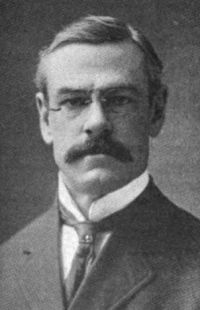
Portrait of Ebenezer Prout Ebenezer Prout,  Fugue (1891)

“ A full cadence in a fugue (which should in all cases be sparingly used) must always be a point of departure for some new entry, if not of the subject, at all events for some important feature of counterpoint. We have referred to this above, but we repeat it as a point of vital importance in fugal writing, which will be enforced by the example just given.
331. We saw in the fugue in D (§ 308) the expediency of occasional rests in the voices (§ 319) . After a rest, the voice which has been silent may enter on any part of the bar; but it should always end before a rest, on an accented beat.
”
Source: Wikisource

Portrait of Ebenezer Prout Ebenezer Prout,  Fugue (1891)

“ An important feature of many, though by no means of all, fugues, is what is known as a Stretto. This is an Italian word meaning "close," and is applied to that part of a fugue in which the entries of the subject and answer succeed one another more closely, that is, at a shorter distance of time, than in the first exposition. For instance, if the subject be four bars in length, the answer will, in all probability, enter at the fifth bar. ”
Source: Wikisource

Get perspective with Kwize: daily news enlightened by great literature