Ebenezer Prout’s Fugue, a treatise on counterpoint and compositional technique, explores the complex structure of fugues through the lens of Johann Sebastian Bach’s Well-Tempered Clavier. Composed as an instructional guide, it highlights the need for proficiency in harmony, counterpoint, and double counterpoint as essential foundations for fugal writing. Prout investigates technical aspects such as exposition, stretto, modulation, and countersubject, critiquing inflexible rules that contradict Bach’s naturalistic approach.
The text emphasizes the equilibrium between structural precision and artistic freedom, asserting that fugue is a dynamic form in which thematic elements must be developed in a unified manner. By examining Bach’s compositions, Prout demonstrates the importance of aligning theoretical principles with the practical demands of composition, presenting his work as both a handbook and a defense of counterpoint’s enduring artistic relevance.
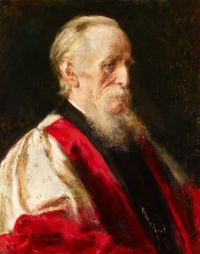 Ebenezer Prout,
Fugue
(1891)
Ebenezer Prout,
Fugue
(1891)
