Fredy Perlman, Plunder (1973)
“ For how can you see dregs, froth and scum where I do? You have merely to see dregs, and you prosecute. Froth, and you judge. Scum, and you execute. Oh, Masters! Your generosity is truly unbounded! ”
Scum, defined as the frothy layer that forms on the surface of a liquid during cooking, has moved beyond its culinary origins to become a multifaceted metaphor in literature. Authors such as Fredy Perlman contrast its physical presence with societal corruption, while Arthur W. Marchmont uses it to illustrate moral decay, describing individuals as "the scum of the gutter." Fulgence Marion, on the other hand, emphasizes its hidden vitality when examined under a microscope, reflecting on nature's intricate secrets.
From Swift's critiques of servile deceit to Feijoo's cautions against moral compromise, scum functions as both a literal and symbolic lens, connecting the tangible with the allegorical. Its dual nature—simultaneously fleeting and incriminating—reveals how literature transforms everyday occurrences into profound reflections on human vulnerability and the complex realities of the world.
Fredy Perlman, Plunder (1973)
“ For how can you see dregs, froth and scum where I do? You have merely to see dregs, and you prosecute. Froth, and you judge. Scum, and you execute. Oh, Masters! Your generosity is truly unbounded! ”
Arthur W. Marchmont, In the Name of the People (1911)
“ Most of the men and some of the women were of the scum of the gutter; filthy beyond description and evil-smelling to the point of nausea—the incarnation of all that is offensive and abominable in humanity. ”
 Jonathan Swift,
The Works of the Rev. Jonathan Swift
(1801)
Jonathan Swift,
The Works of the Rev. Jonathan Swift
(1801)
“ Are we engaged in quarrels and misunderstandings with our neighbours? these were all begun and inflamed by the false, malicious tongues of our servants. Are the secrets of our family betrayed, and evil repute spread of us? our servants were the authors. Do false accusers rise up against us? (an evil too frequent in this country) they have been tampering with our servants. Do our children discover folly, malice, pride, cruelty, revenge, undutifulness in their words and actions? are they seduced to lewdness or scandalous marriages? it is all by our servants. ”
 Benito Jerónimo Feijoo,
Essays, or discourses, vol. 2…
(1780)
Benito Jerónimo Feijoo,
Essays, or discourses, vol. 2…
(1780)
“ He who makes presents to a lady, or a minister of justice, attempts their corruption by the act, and in his imagination supposes he has effected it. You ought, therefore, [Pg 9] my Son, to consider every one who attempts to gain your favour by such means, as an enemy to your conscience, and as a person dangerous to, and one who would injure your honour; and you should look upon him as a man, more deserving of your contempt and indignation, than your courtesy. ”
 Jean-Baptiste Massillon,
Sermons
(1879)
Jean-Baptiste Massillon,
Sermons
(1879)
“ But what renders your injustice toward the pious still more cruel, is, that it is your own examples, your irregularities, and even your censures, which stagger, weaken, and force them sometimes to imitate you; it is the corruption of your manners which becomes the continual and the most dangerous snare to their innocence; it is those foolish derisions with which you continually assault virtue, that force them reluctantly to shelter themselves under the appearances of guilt. ”
 Robert Rogers,
Ponteach; Or, The Savages of America
Robert Rogers,
Ponteach; Or, The Savages of America
“ Can't you avoid them? Let their Vengeance light On others' Heads, no matter whose, if you Are but secure, and have the Cain in Hand: For they're indiff'rent where they take Revenge, Whether on him that cheated, or his Friend, Or on a Stranger whom they never saw, Perhaps an honest Peasant, who ne'er dreamt [Pg 122] Of Fraud or Villainy in all his life; Such let them murder, if they will a Score, The Guilt is theirs, while we secure the Gain, Nor shall we feel the bleeding Victims Pain. ”
Charlotte Biggs, A Residence in France During the Years 1792…
“ Whether you examine the conduct of the nation at large, or that of its chiefs and leaders, your feelings revolt at the one, and your integrity despises the other. You see the idols erected by Folly, degraded by Caprice;—the authority obtained by Intrigue, bartered by Profligacy;—and the perfidy and corruption of one side so balanced by the barbarity and levity of the other, that the mind, unable to decide on the preference of contending vices, is obliged to find repose, though with regret and disgust, in acknowledging the general depravity. ”
Thomas Gordon, Cato's Letter No. 63 — Civil Liberty produces all Civil Blessings… (1722)
“ He must have established deceivers to mislead them with lies, to terrify them with the wrath of God, in case they stir hand or foot, or so much as a thought, to mend their doleful condition; as if the good God was the sanctifier of all villainy, the patron of the worst of all villains! ”
Jonathan Swift,
The Poems of Jonathan Swift, D.D.…
“ Or, how this evil can be borne, Which breeds at once both hate and scorn. Bare innocence is no support, When you are tried in Scandal's court. Stand high in honour, wealth, or wit; All others, who inferior sit, Conceive themselves in conscience bound To join, and drag you to the ground. Your altitude offends the eyes Of those who want the power to rise. ”
John Moore, A View of Society and Manners in France…
“ But it is ridiculous, and seems ungrateful, for people to affect an appearance of indignation against those who provide for them one of the greatest enjoyments of their lives. To chuckle over scandal all the forenoon with every mark of pleasure, and decry it in the evening with affected anger, is as preposterous as it would be in a judge, first to seduce a poor wench to fornication, and then punish her for the sin. ”
 Samuel Johnson,
The Rambler
(1801)
Samuel Johnson,
The Rambler
(1801)
“ Steal! says her husband, she would steal nothing but, perhaps, a few ribbands before they were left off by her lady. Sir, answer'd I, why should you, by supposing me a thief, insult one from whom you have received no injury? Insult, says the lady; are you come here to be a servant, you saucy baggage, and talk of insulting? What will this world come to, if a gentleman may not jest with a servant? Well, such servants! pray be gone, and see when you will have the honour to be so insulted again. Servants insulted—a fine time.——Insulted! Get down stairs, you slut, or the footman shall insult you. ”
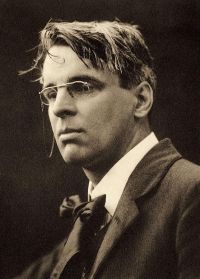 William Butler Yeats,
Ideas of Good and Evil
(1903)
William Butler Yeats,
Ideas of Good and Evil
(1903)
“ The Accusation of Sin produced its necessary fruit, hatred of all that was abundant, extravagant, exuberant, of all that sets a sail for shipwreck, and flattery of the commonplace emotions and conventional ideals of the mob, the chief Paymaster of accusation. ”
 Giovanni Papini,
Life of Christ
(1923)
Giovanni Papini,
Life of Christ
(1923)
“ They will accuse you of all crimes, they will stone you with slander and contumely. Hogs will say that you are filthy, asses will swear that you are ignorant, ravens will accuse you of eating carrion, rams will drive you away as ill-smelling, the dissolute will cry out upon the scandal of your corruptness and thieves will denounce you for theft. But you must always rejoice because the insult of evil men is the consecration of your own goodness, and the mud thrown at you by the impure is the pledge of your purity. ”
 Henry Fielding,
PrefaceTo TheMiscellanies and PoemsOfHenry Fielding…
(1743)
Henry Fielding,
PrefaceTo TheMiscellanies and PoemsOfHenry Fielding…
(1743)
“ Nor do I know anything which can raise an honest man's indignation higher than that the same morals should be in one place attended with all imaginable misery and infamy, and in the other, with the highest luxury and honour. Let any impartial man in his senses be asked, for which of these two places a composition of cruelty, lust, avarice, rapine, insolence, hypocrisy, fraud and treachery, was best fitted, surely his answer must be certain and immediate ”
Cornelius à Lapide, The great commentary of Cornelius à Lapide (1908)
“ For they who cause others to stumble by their ambition, or by the example of their evil life, are guilty of the punishment of hell. And they who are scandalized, and follow the evil examples of others, are condemned as their followers and associates, and both alike perish. The world is full of scandals, because it is full of wicked men, libertines, spend-thrifts, and avaricious people. In order that they may satisfy their lusts, they cause all to stumble. Wherefore the larger part of mankind is damned because of scandals. ”
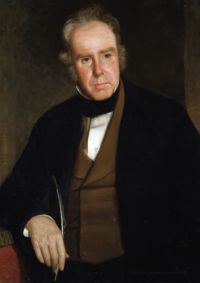 William Carleton,
The Black Baronet; or, The Chronicles Of Ballytrain
William Carleton,
The Black Baronet; or, The Chronicles Of Ballytrain
“ The horrible impress of naked and hardened villany—the light and mirthful delirium of crime—the wanton manifestations of vice, in all its shapes, and the unblushing front of debauchery and profligacy—constituted, when brought together in one hideous group, a sight which made his heart groan for human nature on the one hand, and the corruption of human law on the other. ”
“ This indolence increases their propensity to stealing and cheating. They seek to avail themselves of every opportunity to satisfy their lawless desires. Their universal bad character, therefore, for fickleness, infidelity, ingratitude, revenge, malice, rage, depravity, laziness, knavery, thievishness, and cunning, though not deficient in capacity and cleverness, renders them people of no use in society. ”
 Edward Mandell House,
Philip Dru: Administrator; A Story of Tomorrow…
Edward Mandell House,
Philip Dru: Administrator; A Story of Tomorrow…
“ If there be punishment after death, surely, the creator and disseminator of scandal will come to know the anger and contempt of a righteous God. The good and the bad are all of a kind to them. Their putrid minds see something vile in every action, and they leave the drippings of their evil tongues wherever they go. ”
Jean-Baptiste Massillon,
Sermons
(1879)
“ For, first, who can flatter himself with not being among the number of the persecutors of truth, under the description of scandals? I even speak not of those disorderly souls who have erected the standard of guilt and licentiousness, and who pay little, if indeed any, attention to the public opinion: the most notorious scandals are not always those which are most to be dreaded; and avowed debauchery, when carried to a certain degree, occasions, in general, more censures upon our conduct than imitations of our excesses. ”
 Plato,
The Dialogues of Plato
(1892)
Plato,
The Dialogues of Plato
(1892)
“ If I am or have been corrupting the youth, those of them who are now grown up and have become sensible that I gave them bad advice in the days of their youth should come forward as accusers, and take their revenge; or if they do not like to come themselves, some of their relatives, fathers, brothers, or other kinsmen, should say what evil their families have suffered at my hands. ”
Jean-Baptiste Massillon,
Sermons
(1879)
“ I say, the scandal, first, of imitation. Men always willingly copy after evil, but more especially when held out by great examples; they then ground a kind of vanity upon their errors, because it is through these that they resemble you. The people consider it as giving them an air of consequence to tread in your steps. The city thinks it an honour to adopt all the vices of the court. Your manners form a poison which penetrates even into the provinces ”
 Lucas Malet,
The History of Sir Richard Calmady…
Lucas Malet,
The History of Sir Richard Calmady…
“ Those irregularities of conduct which are smiled at, and taken for granted, in a man made after the normal, comely fashion, become a scandal in the case of a poor, unhappy devil like me, at which good people hold up their hands in horror. ”
 Frances Wright,
A few days in Athens
(1850)
Frances Wright,
A few days in Athens
(1850)
“ Trust me, none can drink of the cup of vice with impunity. But you will say, that there are qualities of so mean or so horrible a nature, as to place the man that is governed by 31them out of the pale of communion with the virtuous. Malice, cruelty, deceit, ingratitude—crimes such as these, should you think, draw down upon those convicted of them no feelings more mild than abhorrence, execration, and scorn. ”
Richard Hurd, The works of Richard Hurd, volume 6…
“ By the help of this magic, we may extract the sting of guilt from every known sin; and, if we have but wit enough, may be as wicked as we please with a safe conscience. 239If the features of this corrupt casuistry have not been overcharged; or, indeed, if there be any such thing in the world as a corrupt casuistry, it may concern us to reflect, that this pest of society could not have arisen but from a contempt of the Apostle’s rule, of being simple concerning evil. ”
R v Brown (1993)
“ If repugnance to general public sentiments of morality and propriety were the test, one would have expected proceedings in respect of the most disgusting conduct to be prosecuted with the greater vigour. ”
 Lady Caroline Lamb,
Glenarvon, Volume 3 (of 3)
Lady Caroline Lamb,
Glenarvon, Volume 3 (of 3)
“ Hardened and impenitent sinner! the measure of your iniquity is full: the 321 price of crime has been paid: here shall your spirit dwell for ever, and for ever. You have dreamed away life’s joyous hour, nor made atonement for error, nor denied yourself aught that the fair earth presented you. ”
Anonymous, Smuggling & Smugglers in Sussex (1900)
“ Villains! not to be won by lenity, despising and rejecting proffered pardons, proceeding from crime to crime, till they arrived at the highest and, until now, unheard-of pitch of wickedness: who, not content with defrauding the King in his customs and revenues; not satisfied with violating the properties and possessions, pursued the lives of his subjects and servants, whose very blood could not satiate their malice—tortures were added to aggravate the pangs of death. ”
 Amos Bronson Alcott,
Concord Days
Amos Bronson Alcott,
Concord Days
“ Have you never observed a sort of people who, though they are themselves the abject slaves of every vice, show a kind of malicious indignation against the immoral conduct of others, and are the most severe to those whom they most resemble? ”
 Matilde Serao,
"Sterminator Vesevo" (Vesuvius the great exterminator…
Matilde Serao,
"Sterminator Vesevo" (Vesuvius the great exterminator…
“ Then all those who have been miserably vile, who have been mercenary and stupid, all these people, real calamity of calamities, must be called before a moral tribunal, and must be branded forever before the public. ”
Livy, From the Founding of the City… (1905)
“ Never has there been such a gigantic evil in the commonwealth, or one which has affected greater numbers or caused more numerous crimes. Whatever instances of lust, treachery, or crime have occurred during these last years, have originated, you may be perfectly certain, in that shrine of unhallowed rites. ”
 Anicius Manlius Severinus Boethius,
The Consolation of Philosophy
(1897)
Anicius Manlius Severinus Boethius,
The Consolation of Philosophy
(1897)
“ For some, when they see the injustice which they themselves suffer at the hands of evil-doers, are inflamed with detestation of the offenders, and, in the endeavour to be unlike those whom they hate, return to the ways of virtue. ”
L. Tyerman, The life and times of the Rev. John Wesley… (1872)
“ For what wickedness is there under heaven, which is not found among us at this day? Not to insist on sabbath breaking, thefts, cheating, fraud, extortion, violence, oppression, lying, robberies, sodomies and murders, which with a thousand unnamed villainies are common to us and our neighbour Christians of Holland, France, and Germany,—what a plentiful harvest we have of wickedness almost peculiar to ourselves! ”
G. W. Foote, Prisoner for Blasphemy
“ These infamous laws are allowed to slumber for years, until some contemptible wretch, to gratify his private malice or a baser passion, rouses them into vicious activity, and fastens their fangs on men whose characters are far superior to his own. ”
Matthew Henry, Commentary on the Whole Bible… (1700s)
“ Whereas it is said all malice, all guile, learn, That one sin, not laid aside, will hinder our spiritual profit and everlasting welfare. (4.) Malice, envy, hatred, hypocrisy, and evil-speaking, generally go together. Evil-speaking is a sign that malice and guile lie in the heart ”
 Benjamin Fiske Barrett,
The New View of Hell
(1872)
Benjamin Fiske Barrett,
The New View of Hell
(1872)
“ Multitudes of this class pass from the natural into the spiritual world every year. Some of them ultimate their supreme selfishness here, in words and deeds befitting devils—in falsehood, fraud, theft, blasphemy, adultery, murder and other abominations. But some of them are, outwardly, quite respectable people. ”
John Trusler, The Works of William Hogarth: In a Series of Engravings
“ Leviticus, chap. xix. verse 15."The wicked is snared in the work of his own hands." Psalms, chap. ix. verse 16.Imagine now this depraved and atrocious youth hand-cuffed, and dragged from his wicked haunt, through the streets to a place of security, amidst the scorn and contempt of a jeering populace; and thence brought before the sitting magistrate, (who, to heighten the scene and support the contrast, is supposed to be his fellow-'prentice, now chosen an alderman,) in order to be dealt with according to law. ”
by Marcus Tullius Cicero; translated by C. D. Yonge, For Publius Quinctius — 81 BC
“ What shall we call you? Wicked? why, even if the recognizances had been forfeited, yet in making such a demand and confiscation of his goods, you were proved to be most wicked. Malignant? you do not deny it. Dishonest? you have already claimed that as your character, and you think it a fine thing. Audacious? covetous? perfidious? those are vulgar and worn-out imputations, but this conduct is novel and unheard-of. What then are we to say? I fear forsooth lest I should either use language severer than men's nature is inclined to bear, or else more gentle than the cause requires. ”
Viscount Henry St. John Bolingbroke, Letters to Sir William Windham and Mr…
“ But then vice and folly such as prevail in our country, corrupt our manners, deform even social life, and contribute to make us ridiculous as well as miserable, will claim respect for the sake of the vicious and the foolish. ”
Samuel Johnson,
The Works of Samuel Johnson, LL.D. in Eleven Volumes…
“ The whole conduct of this despicable faction is distinguished by plebeian grossness, and savage indecency. To misrepresent the actions and the principles of their enemies is common to all parties; but the insolence of invective, and brutality of reproach, which have lately prevailed, are peculiar to this. An infallible characteristick of meanness is cruelty. This is the only faction, that has shouted at the condemnation of a criminal, and that, when his innocence procured his pardon, has clamoured for his blood. ”
 Alexander Bain,
Popular Science Monthly
(1878)
Alexander Bain,
Popular Science Monthly
(1878)
“ One chief outlet for the malevolent impulses is the avenging of wrong, whether private or public. A convicted wrong-doer is punished by the law, and the indignation roused by the crime turns to gratification at the punishment. ”