Nutrient

Definition and stakes

Carlotta C. Greer,  School and Home Cooking

“ NUTRITIVE VALUES.—The per cent of nutrients in a food does not always indicate the quantity of nourishment it will yield. The nutrient must be in a condition to be absorbed. Wheat grains contain as much protein when whole as when ground into meal, yet uncooked whole wheat grains yield little nourishment to the body. They pass through the system with much nutriment unextracted. Even if the unbroken grains are thoroughly cooked, they will not furnish as much nourishment to the body as they will when in the form of meal. ”

Source: Gutenberg

Eugene Christian,  Encyclopedia of Diet: A Treatise on the Food Question…

“ The greater part of the human food of plant origin represents in nature the nutrient material supplied by the parent plant for the early life of the seedling. All grains, nuts, fruits and roots, and tubers are merely modified forms of food material adapted to the rapid nourishment of the young plant.
The starch and the oil of seeds, the sugar of fruit, and the lesser quantities of nitrogen contained in all seeds, are in a more available form for cell-nourishment than would be the original mature portions of plant life.
”
Source: Gutenberg

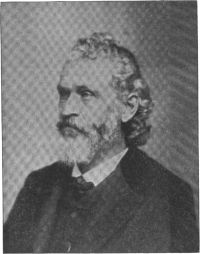
Portrait of Harvey Washington Wiley Harvey Washington Wiley,  Foods and Their Adulteration

“ The above data give a general view of the relations of nutrient in foods of this class. The percentage of mineral matter varies chiefly in proportion to the varying content of common salt. The fat varies from one to about nine percent. Protein exists in quantities from nearly six to 15 percent. Sugar constitutes the predominant nutritive component of almost all these bodies, only one showing a small percentage thereof. ”
Source: Gutenberg

Get perspective with Kwize: daily news enlightened by great literature