Summary

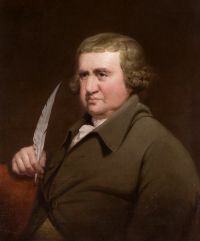
Portrait of Erasmus Darwin Erasmus Darwin Zoonomia, or, the Laws of Organic Life… (1796)

In the savage state, where men live solely by hunting, I was informed by Dr. Franklin, that there was seldom more than one family existed in a circle of five miles diameter; which in a state of pasturage would support some hundred people, and in a state of agriculture many thousands. The art of feeding mankind on so small a grain as wheat, which seems to have been discovered in Egypt by the immortal name of Ceres, shewed greater ingenuity than feeding them with the large roots of potatoes, which seem to have been a discovery of ill-fated Mexico.
Source: Wikisource

Portrait of Erasmus Darwin Erasmus Darwin Zoonomia, or, the Laws of Organic Life… (1796)

But pasturage cannot exist without property both in the soil, and the herds which it nurtures; and for the invention of arts, and production of tools necessary to agriculture, some must think, and others labour; and as the efforts of some will be crowned with greater success than that of others, an inequality of the ranks of society must succeed; but this inequality of mankind in the present state of the world is too great for the purposes of producing the greatest quantity of human nourishment, and the greatest sum of human happiness
Source: Wikisource

Portrait of Erasmus Darwin Erasmus Darwin Zoonomia, or, the Laws of Organic Life… (1796)

The art of cookery, by exposing vegetable and animal substances to heat, has contributed to increase the quantity of the food of mankind by other means besides that of destroying their acrimony. One of these is by converting the acerb juices of some fruits into sugar, as in the baking of unripe pears, and the bruising of unripe apples; in both which situations the life of the vegetable is destroyed, and the conversion of the harsh juice into a sweet one must be performed by a chemical process
Source: Wikisource

Get perspective with Kwize: daily news enlightened by great literature