Prune

Definition and stakes

Mrs. Lance Rawson,  Australian enquiry book of household and general information… (1894)

“ PRUNING is an art I might almost say, though as a matter of fact every man who has a garden, or knows a peach from an orange tree, thinks he knows how to prune, and will inform you as verification of it that he prunes his own trees. And you do not doubt him when you have looked at the trees denuded of half their fruit-bearing shoots. ”
Source: Wikisource

1911 Encyclopædia Britannica (1911)

“ California now produces a fine quality of “prune.” In scientific nomenclature, Prunus is the name of a genus of rosaceous trees, the type of the tribe pruneae, of which the plum, apricot, peach, cherry, &c., are species (see further under Plum) . From this word must be distinguished “to prune,” (1) to cut or trim superfluous growth from a shrub or tree in order to encourage fresh growth and bring into regular form, &c., and (2) to trim or dress the feathers with the bill, used of a bird “preening” itself. ”
Source: Wikisource

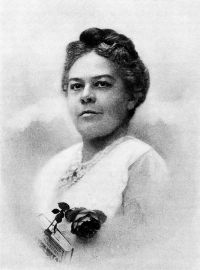
Portrait of Mabel Osgood Wright Mabel Osgood Wright,  The Garden, You, and I

“ With hardy roses the flowers come from fresh twigs on old growth. I never prune in the autumn, because winter always kills a bit of the top and cutting opens the tubular stem to the weather and induces decay. Pruning is a science in itself, to be learned by experience. This is the formula that I once wrote on a slate and kept in my attic desk with my first Boke of the Garden.
April 1. Uncover bushes, prune, and have the winter mulch thoroughly dug in. Place stakes in the centre of bushes that you know from experience will need them.
”
Source: Gutenberg

Get perspective with Kwize: daily news enlightened by great literature