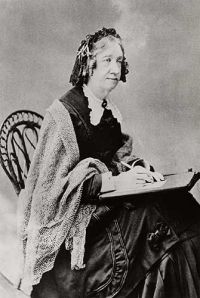
“ Here, growing in picturesque irregularity, were fifty or sixty old peach, nectarine, apricot, plum, and cherry trees, their boles double the thickness of a man's thigh; they had never been disfigured by the pruner's knife or saw, and their enormous size and rough bark, overgrown with grey lichen, gave them an appearance of great antiquity. All about the ground, tangled together in a pretty confusion, flourished many of those dear familiar Old World garden flowers that spring up round the white man's dwelling in all temperate regions of the earth. ”
Peach
Definition and stakes
The peach, a deciduous tree from the Prunus genus, yields a fleshy, fragrant fruit renowned for its versatility and symbolic significance. Cultivated since ancient times, it serves both culinary and ornamental purposes, from Chinese gardens to European orchards. Authors such as W.H.
Hudson admired its ancient, untrimmed majesty, while Henry David Thoreau observed its paradisiacal abundance. U.P. Hedrick underscored its flexibility and cultural heritage, tracing its path from Chinese origins to worldwide cultivation. The peach’s dual function—as both a vital crop and an emblem of longevity—illustrates its lasting connection to human history and natural beauty.
Quotes about “peach”
Henry David Thoreau,
A Week on the Concord and Merrimack Rivers
(1849)
“ He raised the blood peach, which, as he showed us with satisfaction, was more like the oak in the color of its bark and in the setting of its branches, and was less liable to break down under the weight of the fruit, or the snow, than other varieties. It was of slower growth, and its branches strong and tough. There, also, was his nursery of native apple-trees, thickly set upon the bank, which cost but little care, and which he sold to the neighboring farmers when they were five or six years old. To see a single peach upon its stem makes an impression of paradisaical fertility and luxury. ”
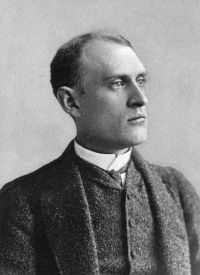
Eugene Field,
Poems of Childhood
(1904)
“ A little peach of emerald hue; Warmed by the sun and wet by the dew, It grew. One day, passing that orchard through, That little peach dawned on the view Of Johnny Jones and his Sister Sue— Them two. ”
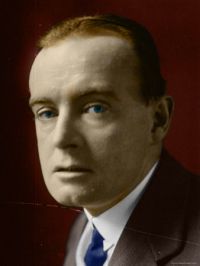
Harriet Alice Chipman Dewey, Letters from China and Japan
“ They are everywhere, each little shop has in the midst of its mess of second hand or cheap new things a charming little peach or plum, pine, azalea, or redberry. In a hot house we saw a tree that had two plums on it, and we frequently see tiny orange trees covered with fruit. The white peach is one of the loveliest things in the world, double blossoms like roses, and is entirely artificially produced. ”
U. P. Hedrick, The Peaches of New York
“ First, the peach is an exceedingly flexible fruit, capable of being moulded to fit many conditions of environment; and, under cultivation, training, feeding and culture in unlike regions, soils and climates, may still be greatly improved and the improvements all intensified and augmented by crossing and selecting. Second, the peach, a gift to the world from China, has seemingly, in its centuries of cultivation by the Orientals, taken on sufficient immutability to make it one of the most stable of species, especially in its fruits. ”
Saki,
The Chronicles of Clovis
(1912)
“ When I was seven years old I recollect being given a peach at a garden party by some Duchess or other; I can't remember a thing about her, except that I imagine our acquaintance must have been of the slightest, as she called me a 'nice little boy,' but I have unfading memories of that peach. It was one of those exuberant peaches that meet you half-way, so to speak, and are all over you in a moment. It was a beautiful unspoiled product of a hothouse, and yet it managed quite successfully to give itself the airs of a compote. ”
Henry Nicholson Ellacombe, The plant-lore & garden-craft of Shakespeare
“ We all know and appreciate the fruit of the Peach, but few seem to know how ornamental a tree is the Peach, quite independent of the fruit. In those parts where the soil and climate are suitable, the Peach may be grown as an ornamental spring flowering bush. When so grown preference is generally given to the double varieties, of which there are several, and which are not by any means the new plants that they are generally supposed to be, as they were cultivated both by Gerard and Parkinson. ”
U. P. Hedrick, The Peaches of New York
“ Profits in peach-growing are often luring, the peach is an attractive fruit, it seems easy to grow and the fruit-grower plants, to learn by experience that peach-growing is not, as so often pictured, a pleasant and profitable avocation but a most exacting vocation. ”
U. P. Hedrick, The Peaches of New York
“ Its numerous reddish-brown veins make it a most beautiful wood but the trees seldom attain sufficient size to give the species value as a lumber-product.The peach is attractive to the eye at all seasons. A tree or an orchard in bloom is a strikingly beautiful sight while a panorama in a peach-country in flowering-time is one of the most beautiful scenes in nature. There is a great difference in the floral beauty of varieties, some sorts having very inconspicuous flowers while others rank with our finest ornamentals when in bloom. ”
U. P. Hedrick, The Peaches of New York
“ Chiefly, these are men more accustomed to the other tree-fruits—most of which make a fair showing without pruning—than to the peach. The peach can go a few years unpruned without becoming an abnormal orchard-specimen but left to itself to the prime of life without the reinvigorating and form-giving knife a peach-orchard becomes a woeful spectacle. ”
U. P. Hedrick, The Peaches of New York
“ But the peach loves sun, heat and clear skies and if these come not naturally the peach-tree must be artificially grown. The peach is not, after centuries of cultivation, acclimatized in England. But in all times, and of all people, the English have been most fond of gardens and orchards and so beautiful and delectable a fruit as the peach could not escape their attention. And so, though under the necessity of growing this fruit on walls or under glass, England, since the Middle Ages, has done much toward the development of the peach, the difficulties of culture seeming to stimulate interest. ”
U. P. Hedrick, The Peaches of New York
“ We have a great many sorts of this fruit, which all thrive to admiration, peach trees coming to perfection, with us, as easily as the weeds. A peach falling to the ground brings a peach tree that shall bear in three years, or sometimes sooner. Eating peaches in our orchards makes them come up so thick from the kernel, that we are forced to take a great deal of care to weed them out, otherwise they make our land a wilderness of peach trees. They generally bear so full that they break great part of their limbs down. ”
Autumn Leaves: Original Pieces in Prose and Verse
“ The tough skin resists its pressure. The knife and plate clash loudly together; the peach is bounding and rolling at the very feet of the young lady, who is in an ecstasy of laughter. Ah! she herself has no small resemblance to a peach, fair, beautiful, and attractive without, and, I sadly fear, with a hard heart beneath. ”
1911 Encyclopædia Britannica, Volume 21… (1911)
“ The fruit of the peach is produced on the ripened shoots of the preceding year. If these be too luxuriant, they yield nothing but leaves; and if too weak, they are incapable of developing flower buds. To furnish young shoots in sufficient abundance, and of requisite strength, is the great object of peach training and pruning. Trees of slender-growing, twiggy habit naturally fall most readily into the fan form of training, and accordingly this has generally been adopted in the culture of peaches and nectarines (fig. 2) . ”
A. V. Kirwan, Host and Guest (1864)
“ The peach yu, it is said in their legends, produces an eternity of life, and preserves the body from corruption to the end of the world. A fine peach is a delicious fruit; it is good with sugar, good without sugar, and excellent, super-excellent with a glass of good Madeira, sherry, or brandy thrown over it. The peach-tree does not always require the protection of the sheltering wall in warmer climates. ”
U. P. Hedrick, The Peaches of New York
“ This peach was grown by Thomas Rivers, Sawbridgeworth, England, from a French peach. Tree a strong grower, vigorous, productive; glands reniform; flowers large; fruit large, round, with a distinct suture; skin thin, tough, lemon-colored, faintly crimson where exposed; flesh yellowish-white, deeply stained at the pit, firm but tender, sugary, brisk ”
Delphian Society, The World's Progress, Vol. 01…
“ One of the most wonderful illustrations of what man can do in changing nature is seen in the case of the peach. Some time, long ago, perhaps in Western Asia, grew a wild tree which bore fruits, at the center of which were the hardest of hard pits, containing the bitterest of kernels; over this hard stone was a thin layer of flesh—bitter, stringy, with almost no juice, and which, as it ripened, separated, exposing to view the contained seed ”
Mrs. Loudon,
Instructions in gardening for ladies
(1840)
“ It must always be remembered that a plant can only be budded on another plant of the same nature as itself; thus a peach may be budded on a plum, as they are both stone fruits, and both belong to the same section of the natural order Rosaceæ; but a peach can neither be budded on a walnut, which belongs to another natural order, nor even on an apple or a pear, both of which, though belonging to the order Rosaceæ, are kerneled fruits, and are included in another section. ”
James Edward Smith,
An introduction to physiological and systematical botany
(1807)
“ The fruit of the Peach and the leaf of the Mullein have a cuticle covered with dense and rather harsh wool, such as is found on many Mexican plants, and on more Cretan ones. The latter we know grow in open places under a burning sun. ”
U. P. Hedrick, The Peaches of New York
“ Peach trees stand within an enclosure by themselves; grow even in the stoniest places without culture. The fruit is the most delicious that the mouth can taste, and often allowable in fevers. One kind, called clingstones, are considered the best; in these the stones are not loose from the fruit as in the others. Many have peach orchards chiefly for the purpose of feeding their swine, which are not allowed to run at large. ”
Charles Darwin,
The Variation of Animals and Plants under Domestication…
“ Whether or not the peach has proceeded from the almond, it has certainly given rise to nectarines, or smooth peaches, as they are called by the French. Most of the varieties, both of the peach and nectarine, reproduce themselves truly by seed. Gallesio (10/29. 'Teoria della Riproduzione Vegetale' 1816 page 86.) says he has verified this with respect to eight races of the peach. Mr. Rivers (10/30. 'Gardener's Chronicle' 1862 page 1195.) has given some striking instances from his own experience, and it is notorious that good peaches are constantly raised in North America from seed. ”
David Pearce Penhallow,
Popular Science Monthly
(1884)
“ The peach is naturally a long-lived tree, instances brought to my notice showing that it may live for upward of one hundred or more years, and, if well cared for, it will certainly produce fruit for a long period. At the present time, however, as in the great peach districts of Delaware and New Jersey, we find that, owing to the certainty of disease appearing, or the inherently weak constitution resulting from its previous operation, the period of a profitable life is limited to nine years, at the end of which time the trees are rooted out of the soil as worthless. ”
Mrs. Loudon,
Instructions in gardening for ladies
(1840)
“ Peaches require rather an adhesive soil, not too rich; as in a rich loose soil they will produce wood rather than fruit. Peach trees are seldom planted against the wall where they are to remain, till they have been two, three, or four years trained; and they are generally removed at the latter end of October, or beginning of November, just as [Pg 205] the leaf begins to fall. They are best trained in the fan manner; and as they always bear their fruit on shoots of a year old, these shoots must always be left on in pruning, and the old wood cut out. ”
U. P. Hedrick, The Peaches of New York
“ Coming to America with the first Spaniards, the peach found such congenial surroundings that it spread rapidly, freely and widely, leading botanists three centuries later to call it 64 a native. In the fruit-areas of the United States, after two centuries of cultivation, though sometimes a luxury and the crop often a speculation, the peach is so perennially plentiful that it is to be found, fresh, canned or evaporated, in every home in the land and the species is represented in American pomologies by over 1000 sorts which have originated in this country. ”
Edward Payson Roe,
The Home Acre
“ Like other fruit-trees, the peach does not thrive on low, wet ground, and the fruit-buds are much more apt to be winter-killed in such localities. A light, warm soil is regarded as the most favorable. ”
Henry Ward Beecher,
Pleasant Talk About Fruits, Flowers and Farming
“ The Vanderveer of the Hudson River, the American Golden Russet, need not, in good seasons, well ripened, fear a regiment of pears in pomological convention, even in the city of Boston. It may not rival the melting qualities of the peach, eating which one knows not whether he is eating or drinking. But the peach is the fruit of a day,—ephemeral; and it is doubtful whether one would carry through the year any such relish as is experienced for a few weeks. It is the peculiarity of the apple that it never wearies the taste. ”
U. P. Hedrick, The Peaches of New York
“ The botany of the peach, as compared with its congeners, the plum and the cherry, is simple, indeed, and is well agreed upon by botanical writers, so that this book may be said to be almost wholly a horticultural one. Yet the few pages devoted to the botany of the peach may make plainer, to the horticulturist at least, the botany of this fruit.The chief contribution The Peaches of New York makes to pomology is in the descriptions of varieties it contains. All who grow or use peaches are dependent on descriptions of fruit and tree for the identification of varieties. ”
U. P. Hedrick, The Peaches of New York
“ The characters given in the foregoing description are those of the cultivated peach—the consummate fruit of Prunus persica. The generic name, Prunus, is the ancient Latin name of the plum, Prunus domestica, the type species. The specific name, persica, commemorates the old belief that the peach came from Persia. The common name, peach, in English, as in most European languages, is a derivative from persica. Amygdalus, found several times in the synonomy, is the Syrian name of the almond. ”
Edward Payson Roe,
The Home Acre
“ The tree can probably mature these buds into large, beautiful peaches, and still maintain its vigor. By this shortening-in process you have less tree, but more fruit. The growth is directed and kept within proper limits, and the tree preserved for future usefulness. Thus the peach-trees of the garden will not only furnish some of the most delicious morsels of the year, but also a very agreeable and light phase of labor. They can be made pets which will amply repay all kindness; and the attentions they most appreciate, strange to say, are cutting and pinching. ”
Charles Darwin,
The Variation of Animals and Plants under Domestication
“ A first-rate peach, almost globular in shape, formed of soft and sweet pulp, surrounding a hard, much furrowed, and slightly flattened stone, certainly differs greatly from an almond, with its soft, slightly furrowed, much flattened, and elongated stone, protected by a tough, greenish layer of bitter flesh. ”
W. H. Hudson,
Far Away and Long Ago: A History of My Early Life
“ He, too, had a peach orchard, and when the fruit ripened his family, assisted by all their neighbours, feasted from morning till night on peaches, and hardly left room in their stomachs for roast meat when it was dinner-time. ”
U. P. Hedrick, The Peaches of New York
“ Next to the pomegranate, the Asiatics prize the peach, and the Oriental poetry compares its lusciousness to the fruits of Paradise. The culture of the peach reaches its northern limit in the district of the Ili. The young plants, which, as throughout Asia, are grown from the seed, without grafting, suffer greatly there from frost and require careful covering; nevertheless the large, smooth, red and the rough, hairy, yellow fruit of the Chinese varieties develop excellent characteristics. ”
Henry Nicholson Ellacombe, The plant-lore & garden-craft of Shakespeare
“ The references here are only to the colour of the Peach blossom, yet the Peach tree was a well-known tree in Shakespeare's time, and the fruit was esteemed a great delicacy, and many different varieties were cultivated. Botanically the Peach is closely allied to the Almond, and still more closely to the Apricot and Nectarine; indeed, many writers consider both the Apricot and Nectarine to be only varieties of the Peach. ”
Catharine Esther Beecher,
American Woman's Home: Or, Principles of Domestic Science…
“ The yellows is a disease of peach-trees, which is spread by the pollen of the blossom. When a tree begins to turn yellow, take it away with all its roots, before it blossoms again, or it will infect other trees. Planting tansy around the roots of fruit-trees is a sure protection against worms, as it prevents the moth from depositing her egg. Equal quantities of salt and saltpetre, put around the trunk of a peach-tree, half a pound to a tree, improve the size and flavor of the fruit. ”