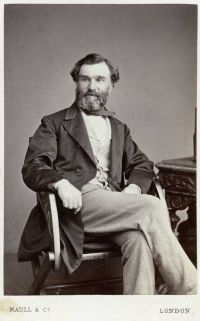
“ It is much to be regretted, that of late years, so little attention has been given in this country, to the study of pomology, and that so few efforts have been made to encourge a taste for this most important, most instructive, and intellectual branch of horticultural science. ”
Pomology
Definition and stakes
The theme of “pomology” has been addressed by authors such as U. P. Hedrick, Robert Hogg and Henry Ward Beecher. It is often associated with terms like pottery, mummy, bronze, Pompeii and bead.
Quotes about “pomology”
U. P. Hedrick, The Pears of New York
“ In this catalog are many pears in the pomologies of today, but, unfortunately without descriptions or any attempt to determine duplicates in names or varieties, the list serves for little more than a monument for one of the first and one of the most zealous collectors of pears. Le Lectier, however, may be said to have introduced the golden age of pomology in France; for, during historical times there seems to have been no other period in which pomology exercised the minds and hands of well-to-do people as in the century that followed Le Lectier. ”
U. P. Hedrick, The Pears of New York
“ America is indebted to the vast region of central and western Europe for but one major variety, the Forelle, and this sort is of little importance.Pomology, the world over, however, is indebted to Germany for much valuable pomological literature. Cordus, Mayer, Christ, Diel, Dittrich, Truchsess, Hinkert, Dochnahl, Oberdieck, Engelbrecht, Lauche, and Gaucher, all Germans, and Kraft, an Austrian, have been industrious compilers, and have given pomology some of its best texts on systematic pomology. ”
U. P. Hedrick, The Pears of New York
“ There must always be pioneers, men who stray from beaten paths, [19] but pioneers seldom exert wide and deep influence at once—leave the worn path, so to speak, and at once construct a macadamized road—yet this was what Van Mons did. Pomologists agree that until his time no man had exerted so profound an influence on pomology. His love of discovery and love of labor permeated fruit-growing in Europe and America. Fortunately, it was the age of the amateur fruit-grower. ”
U. P. Hedrick, The Pears of New York
“ It is apparent at once that one cannot describe accurately nor understand the descriptions of others unless acquainted with the organs of tree and fruit—one must know the form and structure of the whole plant. A study of the organs of plants is structural botany. Plant descriptions are portraitures of the plant’s organs, and structural botany thus becomes the foundation of systematic pomology, with a study of which, as concerns the pear, we are to be chiefly concerned in the following pages. ”
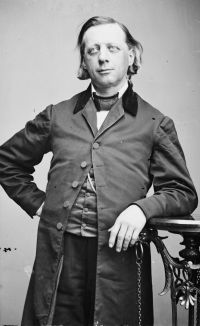 Henry Ward Beecher,
Pleasant Talk About Fruits, Flowers and Farming
Henry Ward Beecher,
Pleasant Talk About Fruits, Flowers and Farming
“ Doubtless, it is easier to do it in plants which have a short period; whose whole life passes along before the eye every season, than in plants whose very youth outlasts ten generations of Dahlias, Pansies, Balsams, etc. But that only makes it the more important that we should be up and doing. Let no work be regarded as classic which does not take into its design the most thorough enunciation of all the peculiarities of fruits, and pomology will receive more advantage in ten years, than it could by a hundred years of rambling, unregulated, discursive descriptions. ”
“ During the last century, the writings of Switzer, Langley, Hitt, Miller, and Abercrombie, added little to what have already been noticed, except that Switzer first mentions the Nonpareil; and it is to Forsyth that we are indebted for a more extended knowledge of the different varieties, then known to exist in this country. With Thomas Andrew Knight, Esq., the first President of the London Horticultural Society, a new era in the history of pomology commenced, and during his lifetime there was more attention devoted to this study, than had been since the days of Evelyn and De Quintinye. ”
J. A. Warder, American Pomology. Apples
“ It has been estimated that there may be as many as one in ten of our seedling orchard trees that would be ranked as "good," but not one in a hundred that could be styled "best." [2] Certain individuals have devoted themselves to the troublesome though thankless office of collecting these scattered varieties of decided merit, and from their collections our pomological societies will, from time to time, select and recommend the best for more extended cultivation. ”
J. A. Warder, American Pomology. Apples
“ Were I asked to describe the location of the fabled fountain of Hygeia, I should decide that it was certainly situated in an orchard; it must have come bubbling from earth that sustained the roots of tree and vine; it must have been shaded by the umbrageous branches of the wide-spreading apple and pear, and it was doubtless approached by alleys that were lined by peach trees laden with their downy fruit, and over-arched by vines bearing rich clusters of the luscious grape, and they were garnished at their sides by the crimson strawberry. ”
Samuel Birch, History of Ancient Pottery: Greek…
“ The ornamentation consists of geometrical ornaments incised or stamped in bands round the neck and body—such as maeanders, chevrons, stars, and dots—the incisions being made while the clay was moist. In rare cases we meet with painted ornaments in white applied directly to the surface. Besides the urns, which often almost fill the chamber, accessory objects in the form of common pottery, fibulae, and other bronze objects, spindle-whorls and amber objects, are found in the tombs. ”
Marc Monnier, The Wonders of Pompeii
“ However that may be, the articles are at the museum, and everybody can look at them. There is a forceps, to pull teeth with, as some affirm; to catch and compress arteries, as others declare; there is a specillum of bronze, a probe rounded in the form of an S; there are lancets, pincers, spatulas, hooks, a trident, needles of all kinds, incision knives, cauteries, cupping-glasses—I don't know what not—fully three hundred different articles, at all events. This rich collection proves that the ancients were quite skilful in surgery and had invented many instruments thought to be modern. ”
Frederick W. Hamilton, Books Before Typography
“ The surface of a stone, a bone, or a shell, a flat piece of wood, bark or leaf of a tree, a plate of metal, the facet of a gem, any one of a thousand things can be used and has been used for this purpose. The Egyptians and Greeks were in the habit of using the fragments of broken pottery for their less important records. The materials which have been most used, however, have been the Assyrian clay tablet, which has been already described, papyrus, vellum, and paper. ”
Richard Bitmead, French Polishing and Enamelling…
“ In getting up the permanent body, commence with a slight embodying; let this stand, and when the sinking period is over rub it down with a felt rubber and powdered pumice-stone; continue this several times, till the surface presents a satisfactory appearance, and the job is ready for the spiriting process. By this means the wood will retain its natural colour, and a beautiful transparent polish will result, and remain for a number of years. ”
 Maxwell Sommerville,
Engraved Gems
Maxwell Sommerville,
Engraved Gems
“ The builder’s stones are graven—the footway is of pictured pebbles, miniatures, amulets, and seals, reflecting lineaments and traces of the history of entombed generations. Their inscriptions reveal to us the impress of ancient, mediæval, and modern art. ”
Thorne Deuel, American Indian Ways of Life: An Interpretation of the Archaeology of Illinois and Adjoining Areas
“ Art in several forms flourished—carving in the round and in relief, the making of fine symmetrical polished, decorated and painted pottery commonly called typical Hopewellian, hammered copper jewelry, the setting of pearls and highly-colored native stones as eyes in sculptured animals and in bear-tooth pendants and ear ornaments, etching of delicate designs, naturalistic and conventional, on bone and the modeling and firing of exquisite statuettes in clay. ”
Thomas William Cutler, A Grammar of Japanese Ornament and Design (1880)
“ Pottery as an art doubtless preceded the manufacture of glass, and probably originated in Phœnicia or Egypt, but that vitrification had reached a high degree of excellence more than twenty centuries ago, we learn from Greek and Roman specimens. The discovery of enamels follows, as a natural sequence, upon the knowledge of pottery by the ancients, and necessarily the whole class of vitreous subjects, either transparent or opaque, are equally applicable to pottery, porcelain, and metals. Enamelling is of three kinds,—cloisonné, chamlevé, and surface enamel painting. ”
John Stewart Milne, Surgical Instruments in Greek and Roman Times
“ In others there are longitudinal or spiral grooves running along the instrument. In some cases the bronze is decorated with an inlay of silver damascening. This is rare in the instruments from Pompeii, though there are two probes with a spiral inlay in the Naples Museum. The majority of the instruments treated in this way have been found in the western [Pg 18] provinces, and they are of later date than the Pompeian. The handles of some scalpels belonging to the third century are beautifully inlaid with silver. ”
 W. M. Flinders Petrie,
Ten years' digging in Egypt, 1881-1891
W. M. Flinders Petrie,
Ten years' digging in Egypt, 1881-1891
“ When we entered a tomb, I opened the coffins in the gentlest way, drawing or cutting out the pegs which fastened them; and then a glance inside showed if any bead-work existed. If there were bead patterns, the next step was to fetch a petroleum stove down into the chamber, melt a batch of beeswax, and then when it was on the point of chilling, ladle it out, and dash it over the bead-work. If the wax is too hot it sinks in, and soaks all the mummy wrappings into a solid mass; if poured on, it runs off the body in a narrow stream. ”
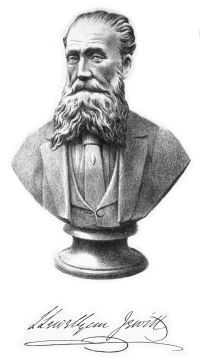 Llewellynn Frederick William Jewitt,
Grave-mounds and Their Contents
Llewellynn Frederick William Jewitt,
Grave-mounds and Their Contents
“ Thus the relics which they contain have come down to us intact, and even now tell their wondrous tale, in a language of their own, of ages and of races of beings long since passed away. A single implement of stone or of flint; a weapon or an ornament of bronze, of iron, or of bone; a bead of jet or of glass; an urn, or even a fragment of pottery; or any one 2 of the infinity of other relics which are exhumed, no matter to what period they belong, or from what locality they may have come; one and all tell their own tale, and supply new links to our ever-extending chain of knowledge. ”
Jennie Hall, Buried Cities, Volume 1: Pompeii
“ In the hundreds of houses and shops of this little town the excavators have found bronze tables and lamps and lamp stands and wine jars and kitchen pots and pans and spoons and glass vases and silver cups and gold hairpins and jewelry and ivory combs and bronze strigils and mirrors and several statues of bronze and marble. But where they had hoped to find thousands of precious things they have found only hundreds. Many pedestals are empty of their statues. ”
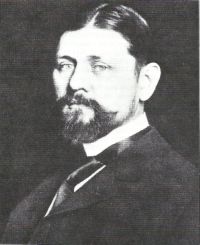 George Frederick Kunz,
The magic of jewels and charms
George Frederick Kunz,
The magic of jewels and charms
“ The beads were of various forms, sometimes round or oval, and at others, rectangular or oblong; besides the stones in general use, such as the emerald, carnelian, agate, lapis lazuli, amethyst, rock-crystal, beryl, jasper and garnet, beads of gold, silver, glass, faience, and even of clay and straw, were employed. To complete the efficacy of the necklace, small images of the gods and of the sacred animals were added as pendants. Even on the mummies and mummy cases such ornaments are painted in imitation of necklaces or collars of precious stones, with flowers, etc., as pendants. ”
Pierre-Joseph Buc'hoz, The Toilet of Flora
“ Spread your Pomatum about an inch thick upon several dishes or plates, strewing the flowers you make choice of on one dish, and covering them with another. Change the Flowers for fresh ones every twelve hours, and continue to pursue this method for ten or twelve days; mixing the pomatum well, and spreading it out every time that fresh Flowers are added. It will soon acquire a fragrant scent, and may be used in what manner you think proper. It is good for almost every cosmetic purpose, but more particularly for the hair, which it nourishes, strengthens, preserves, and thickens. ”
George William Askinson, Perfumes and Their Preparation
“ A. Wax Pomades. Stick Pomatum.This is usually formed into oval or round sticks which are wrapped in tin foil. They are colored and perfumed as desired. The ordinary varieties are: white, for light blond hair,295 which is left uncolored; pink, colored with carmine; brown, colored with umber; and black, colored with bone black. The coloring matters are always rubbed up with oil. Red pomatum may be colored with alkanet root, which is macerated for some time with the melted fat. The base of these preparations consists of:The mass may be made harder or softer by increasing or diminishing the wax. ”
Samuel Birch, History of Ancient Pottery: Greek…
“ From the next step in the progress of the manufacture—namely, that of modelling in clay the forms of the physical world—arose the plastic art. Delicate as is the touch of the finger, which the clay seems to obey, almost as if comprehending the intention of the potter’s mind, yet certain forms and ornaments which require a finer point than the nail gave rise to the use of pieces of horn, wood, and metal, and thus contributed to the invention of tools. ”
William Burton, Harry R. H. Hall, Albert van de Put, Henry B. Walters, Robert L. Hobson and Bernard Rackham, 1911 Encyclopædia Britannica (1911)
“ In fact, the knowledge of the methods and practices of the primitive potters of our own time furnishes the best possible guide to the methods of fabrication and ornamentation of the ancient specimens that are dug up from barrows, grave mounds, and tumuli. It is only natural that the materials and methods of such pottery are always of the simplest. The clay is used with very little preparation, and it is no unusual thing to find bits of stone, gravel, &c., embedded in the paste of such wares, though at a later stage of development they would have been removed. ”
“ The new modelling material, in fact, gave a fillip of novelty to the art, and the coffins and crosses proved, when completed, to have a most desirable quality of solidity and of lasting and retaining their shape and form far better than the similar objects in clay. ”
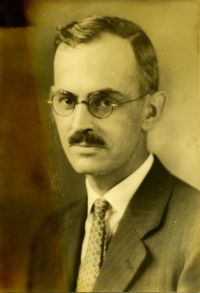 Carl E. Guthe,
Pueblo pottery making: a study at the village of San Ildefonso
(1925)
Carl E. Guthe,
Pueblo pottery making: a study at the village of San Ildefonso
(1925)
“ It is, therefore, quite conceivable that other stimuli, as the discovery of new clays of surpassing excellence, or of fine new pigments, may have proved equally potent in ancient times, and that some of the striking mutations in pottery making, which have so puzzled archaeologists, may have been originally started by such discoveries, and been brought to fruition by the genius of prehistoric Marias and Nampeos. ”
J.-N. Gannal, History of Embalming
“ The mummies that have been dried by means of astringent and balsamic substances, are filled as with a mixture of aromatic resins, and the others with asphaltum or pure bitumen.“Mummies filled with aromatic resins are of an olive colour; the skin is dry and flexible, like tanned leather; it is rather contracted upon itself, and appears to form but one body with the fibres and the bones, the features of the face are recognizable, and appear to be the same as in the living state ”
Walter Johnson, Byways in British Archaeology
“ We must now leave our first group of objects—the axes, the knives, the arrow-tips, with fire-kindlers, pottery, querns, spindle-whorls, and all similar appliances, in order to give some attention to the next division of the relics. This class, it will be remembered, comprises amulets, talismans, and symbolical objects. Some difficulty arises when we try to separate these from the purely decorative articles, but there are certain relics whose purpose does not seem to admit of doubt. ”
Agnes Robertson Arber, Herbals, Their Origin and Evolution…
“ From this epoch onwards, the history of botanical illustration is intimately bound up with the history of wood-engraving, until, at the extreme end of the sixteenth century, engraving on metal first came into use to illustrate herbals. During the seventeenth century, metal-engravings and wood-cuts existed side by side, but wood-engraving gradually declined, and was in great measure superseded by engraving on metal. ”
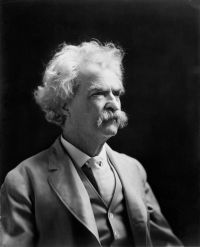 Mark Twain,
The Innocents Abroad — Volume 04
Mark Twain,
The Innocents Abroad — Volume 04
“ The most exquisite bronzes we have seen in Europe, came from the exhumed cities of Herculaneum and Pompeii, and also the finest cameos and the most delicate engravings on precious stones; their pictures, eighteen or nineteen centuries old, are often much more pleasing than the celebrated rubbish of the old masters of three centuries ago. ”
