Summary

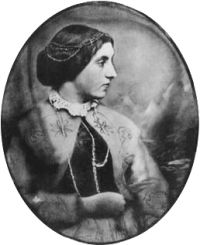
Portrait of Mrs. Loudon Mrs. Loudon Instructions in gardening for ladies (1840)

The best manure for a lawn is soot.
I have dwelt longer than I otherwise should have done on the management of lawns, not only because I am a great admirer of a smooth green turf, but because I believe it is a subject not generally understood. Most persons imagine that if they lay down turf, or sow grass seeds, they have done all that is requisite; and my object is simply to impress upon the minds of my readers, that this is not enough: for as there are different kinds of turf and grasses, it is as necessary to choose which to take, as to select flowers for the flower-garden.
Source: Gutenberg

Portrait of Mrs. Loudon Mrs. Loudon Instructions in gardening for ladies (1840)

Loudon calls the key-note, from the natural scenery of the neighbourhood, has made his rocks appear “to crop out” of the soil, as though naturally, in such situations as to give the best effect to the scenery. The plants deposited in the hollows of these rocks, are so admirably placed, and the art with which they are cultivated, is so skilfully concealed, that no illusion can be more complete; and we may fancy ourselves in a scene of nature, but of nature in her greatest beauty and highest luxuriance.
Source: Gutenberg

Portrait of Mrs. Loudon Mrs. Loudon Instructions in gardening for ladies (1840)

For the second purpose, that of supplying the plant with nourishment, the root divides at the extremity of each shoot into numerous fibres or fibrils, each furnished at its extremity with a spongiole or spongy substance, which affords the only means the plant possesses of absorbing the moisture necessary for its support. It is thus quite clear, that every thing that tends to nourish and increase the growth of the root, must contribute to the health and vigour of the rest of the plant; and that no plant can thrive, the root of which is cramped in its growth, or weakened for want of nourishment.
Source: Gutenberg

Get perspective with Kwize: daily news enlightened by great literature