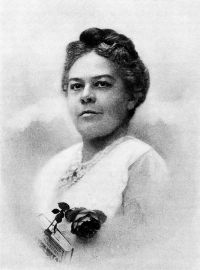
Mabel Osgood Wright

Mabel Osgood Wright

Summary

Portrait of Mabel Osgood Wright Mabel Osgood Wright The Garden, You, and I

What a contrast it all is, our economy and nature's lavishness; our impatience, nature's calm assurance! In the garden the sower feels a responsibility, the sweat beads stand on the brow in the sowing. With nature undisturbed it may be the blind flower of the wild violet perfecting its moist seed under the soil, a nod of a stalk to the wind, a ball of fluff sailing by, or the hunger of a bird, and the sowing is done.
Source: Gutenberg

Portrait of Mabel Osgood Wright Mabel Osgood Wright The Garden, You, and I

There are white varieties of almost every garden flower that blooms between the last frost of spring and winter ice. The snowdrop of course is white and the tiny little single English violet of brief though unsurpassing fragrance; we have white crocuses, white hyacinths, narcissus, lilies-of-the-valley, Iris, white rock phlox, or moss-pink, Madonna and Japan lilies, gladiolus, white campanulas of many species, besides the well-known Canterbury bells, white hollyhocks, larkspurs, sweet Sultan, poppies, phloxes, and white annual as well as hardy chrysanthemums.
Source: Gutenberg

Portrait of Mabel Osgood Wright Mabel Osgood Wright The Garden, You, and I

On either side of the rough bars leading between our boundary wall and the meadow stands a dead cedar tree, from which the dry, moss-covered branches have been broken by the loads of hay that used to be gathered up at random and carted out this way. Wild birds doubtless used these branches as perches of vantage from which they might view the country, both during feeding excursions and in migration, and thus have sown the seed of their provender, for lo and behold, around the old trees have grown vines of wild grapes, with flowers that perfume the entire meadow in June.
Source: Gutenberg

Get perspective with Kwize: daily news enlightened by great literature