Absorbent

Definition and stakes

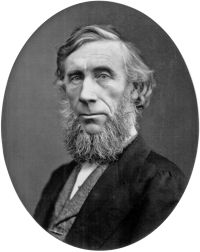
Portrait of William Whewell William Whewell,  History of scientific ideas (1858)

“ An increased absorption is produced by an increased susceptibility of the ‘absorbent orifices.’ And thus, in this view, each organic power may be contemplated either as sensibility or as contractility, and may be supposed to be rendered more intense by magnifying either of these its aspects; although, in fact, neither can be conceived to be increased without an exactly commensurate increase of the other. ”
Source: Gutenberg

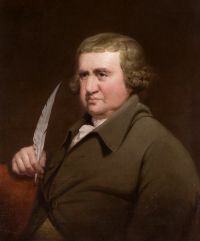
Portrait of Erasmus Darwin Erasmus Darwin,  Zoonomia, or, the Laws of Organic Life… (1796)

“ The absorbent vessels become torpid by the diminution of external heat, sooner than the secerning ones, which are longer kept warm by the circulating blood, from which they select the fluid they secrete; whereas the absorbent vessels of the nostrils drink up their fluids, namely the thin and saline part of the mucus, after it has been cooled by the atmosphere. Hence the absorbents ceasing to act, and the secerning vessels continuing some time longer to pour out the mucus, a copious thin discharge is produced, which trickles down the nostrils in cold weather. ”
Source: Wikisource

Joseph Rogerson Cotter,  1911 Encyclopædia Britannica, Volume 1… (1911)

“ The method consists in comparing the intensity after transmission through a layer of known thickness of the absorbent with the intensity of light from the same source which has not passed through the medium, k being thus obtained for various thicknesses and found to be constant. In the case of solutions, if the absorption of the solvent is negligible, the effect of increasing the concentration of the absorbing solute is the same as that of increasing the thickness in the same ratio. ”
Source: Wikisource

Get perspective with Kwize: daily news enlightened by great literature