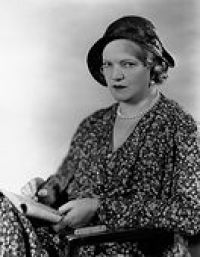
“ The way in which bandaging is sometimes done is cruel in the extreme. Cases that are a disgrace to humanity are constantly coming under our notice, in which limbs are lost for life by the treatment they receive in this respect. Skilful surgeons do it in the most gentle manner; they even swathe the limbs in soft loose cotton before they apply the bandages, so that a perfectly equal and comforting pressure may be secured. Lay the limb to rest, well and softly supported in a horizontal position. When the swelling falls, gently tighten the bandage from time to time as required. ”
Bandaging
Definition and stakes
Quotes about “bandaging”
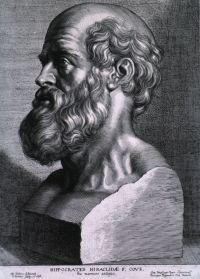
Hippocrates,
Instruments of Reduction
“ Bandaging,-agreeably to the rule in other joints; but this is to be attended to also,-the bandages should be numerous, and softer than usual; compression less; more water than usual to be used in the allusions; to be applied especially to the heel. The same object should be sought after in the position as in the bandaging, namely, that the humors may not be determined to the heel; the limb to be well laid should have the heel higher than the knee. Splints not to be used.Part XXXI When the foot is dislocated, either alone, or with the epiphysis, the displacement is more apt to be inward. ”
Aegineta Paulus, The seven books of Paulus Ægineta… (1844)
“ When the fracture is free from inflammation and recent, we must use linen bandages of a proper length, and three or four fingers in breadth, which have been soaked in water or oxycrate, but when there is inflammation, thin soft pieces of wool steeped in oil are to be used. And if the fracture be at the middle of the arm the bandaging must commence at the fracture, and after two or three turns the bandaging is to be carried upwards, in order, as he says, that the overflow of blood to the part may be intercepted ”

“ For the limb should by all means lie straight upon some level and soft object, since the bandaging must necessarily be overcome by any distortion in the placing of the leg, whenever or to whatever extent it may be inclined. The patient, when bandaged, should return the same answers as formerly stated, for the bandaging should be the same, and the same swellings should arise in the extremities, and the slackening of the bandages in like manner, and the new bandaging on the third day; and the bandaged part should be found reduced in swelling ”
Aegineta Paulus, The seven books of Paulus Ægineta… (1844)
“ But there the bandaging must be made slacker; and stronger, on the other hand, where the fracture swells up. It is better that the chest should be moderately bound with the arm, lest by its motions it should derange the [459] position. If inflammation should come on (which we know by the swelling and redness around, and from the limb being more tightly bound than formerly) , or if the fracture become deranged, or if, without these occurring, the bandages become slacker, or, on the other hand, tighter than proper, the bandages are to be loosed and everything rectified. ”
Girl Scouts of the United States of America, Scouting For Girls, Official Handbook of the Girl Scouts
“ Each turn covers two-thirds of the one below in order to hold firmly. The pressure must be uniform when the bandage is finished. Fasten the ends as described under circular bandages, or divide the end of the bandage into two parts for several inches—long enough to wind around the part bandaged. Tie a single knot at the base to prevent further dividing, and wrap the ends around the part in different directions; tie in a hard knot to hold firmly.Bandaging Fingers and Toes—In bandaging fingers and toes it is usually best to bandage the whole of the injured member. ”
Girl Scouts of the United States of America, Scouting For Girls, Official Handbook of the Girl Scouts
“ In bandaging a leg both above and below the knee, the bandage must be put on with a view to the necessary bending of the knee in walking and sitting, if the patient is expected to use the leg.8. Never apply a wet bandage, as you cannot judge of just how much pressure will be exerted when the bandage dries, because of the shrinkage of cloth with drying; much greater in some cloth than in others.Kinds of roller bandages:1. Circular for parts uniform in size, as the body.2. Spiral for conical surfaces, as fingers or toes. ”
Robert Liston,
Elements of Surgery
“ The bandage ought to encircle not only the wounded part, but every part of the limb with a uniform tightness, not so great as to arrest the general circulation; the parts are thereby supported, and engorgement prevented. This method, when employed previously to the effusion of much blood into the cellular tissue, has proved effectual in wounds even of the brachial, femoral, and carotid arteries. When blood has been extensively injected into the limb, when the aperture in the vessel has remained pervious, and when a large diffused aneurism exists, bandaging is worse than useless. ”
Jane Eayre Fryer, The Mary Frances First Aid Book
“ If you practice putting these kinds of bandages on your dolls perhaps you will be able some day to help somebody who gets hurt, and seem yourself like a fairy to the person whose pain you helped.The children became so enthusiastic in practising the various methods of bandaging that it grew to be quite a joke in their homes. Many times they waylaid the various members of their families, whom they wouldn’t let go until they were bandaged to look like heroes from the battlefield. ”
“ There are two useful purposes to be fulfilled by bandaging: (first,) strength, which is imparted by the compression and the number of folds. In one case the bandage effects the cure, and in another it contributes to the cure. For these purposes this is the rule-that the force of the constriction be such as to prevent the adjoining parts from separating, without compressing them much, and so that the parts may be adjusted but not forced together; and that the constriction be small at the extremities, and least of all in the middle. ”
Girl Scouts of the United States of America, Scouting For Girls, Official Handbook of the Girl Scouts
“ Blueness of the skin above or below the bandage always means the bandage must be loosened. Remember in applying a bandage immediately after an injury that considerable swelling may occur later, and apply your bandage more loosely than if bandaging after the swelling has gone down. Always loosen a bandage that is tight enough to cause pain or blueness. ”
Girl Scouts of the United States of America, Scouting For Girls, Official Handbook of the Girl Scouts
“ The cravat bandage is convenient to use in bandaging the hand, foot, head, eyes, throat and jaw; for tying on splints; for tying around the limb in case of snake bite, and in making a tourniquet.Always tie the bandage with a square knot to prevent slipping. Care must be used in applying the triangular [206] bandage to have it smooth and firm, folding the loose ends into pleats evenly.Bandage for Hand—For wound of the palm, lay cravat in straight line, place palm across it at the middle. Fold ends over the back of hand, carry around wrist and tie. ”
G. A. Henty,
A Soldier's Daughter, and Other Stories
“ Half the men have come down from the wall, and a good many of them are adepts in the art of bandaging wounds, having been enlisted among fighting tribes. Your bandaging has been really effective, but these men will make a neater job of it. ”
Robert Liston,
Elements of Surgery
“ A broad bandage is applied round the pelvis over the groin, and down the thigh, investing all that part of the limb left uncovered by the previous bandaging. A broad band, like a riding belt, is fastened round the pelvis, so as to bind the splint to the trunk, and thereby keep the broken surfaces of the bone in contact. ”
Berkeley Hill, The essentials of bandaging (1869)
“ In doing this, the point of the heel must catch the middle of the bandage. If the foot is a long one, the roller should be three [Pg 22] inches broad; but a narrower bandage is more easily fitted on a small foot. After the first turn, the bandaging is continued by carrying the roller in figures of 8 round the foot and ankle, passing alternately above and below the first turn until the ankle is covered as in fig. ”
Nina Wilcox Putnam,
Believe You Me!
“ Well, as to real work, that sheaf of yellow papers up to the auto school had nothing on the bandaging game when it come to understanding it properly. Believe you me, that bandage had a will of its own, and the only way to make it mind would of been to step on it and kill it. But after a little I managed to tie up the lady pretty good, and before I was done I had my mind made up that Musette had lost her regular job and was going to be a bandage mannequin from that P. M. on until I got the hang of the thing. ”
The Home Medical Library, Volume 1…
“ If the ankle or knee be sprained the patient must go to bed for at least twenty-four hours, and give the limb a complete rest.When the wrist or shoulder is sprained the arm should be confined in a sling. In the more serious cases the injured joint should be fixed in a splint before bandaging. An injured elbow joint is held at a right angle by a pasteboard splint, a bandage, and a sling, while the knee and wrist are treated with the limb in a straight line, as far as possible. ”
The Home Medical Library, Volume 1…
“ In the case of an injured artery of any considerable size, the amount of pressure required to stop the bleeding will arrest all circulation of blood in the limb, so that great damage, as well as pain, will ensue if it be continued more than an hour or two, and during this time the limb should be kept warm by thick covering and hot-water bags, if they can be obtained.Bleeding from a deep puncture may be stopped by plugging the cavity with strips of muslin which have been boiled, or with absorbent cotton, similarly treated, keeping the plug in place by snug bandaging. ”
Berkeley Hill, The essentials of bandaging (1869)
“ When the hand is covered by these figures of 8 the bandage is passed up the forearm by reverses placed over the extensor muscles till the elbow is nearly reached. Before going further a dossil of cotton wool is placed in the bend of the elbow, and on the inner condyle; the joint is bent to the degree that will be required by the splint, and the patient told to grasp some part of his dress, or the sleeve of the other arm, that he may not unconsciously extend the joint again while the bandage is being rolled round it. ”
Berkeley Hill, The essentials of bandaging (1869)
“ When all is ready, an assistant standing on each side of the bed pulls steadily on the ends to keep up continuous pressure on the abdominal viscera as the fluid escapes. [Pg 11] After the fluid is evacuated the ends are wound firmly round the body in front, while the puncture in the wall of the belly is closed by a fold of lint attached with a strip of plaster.The T Bandage is used to apply dressings, compresses, &c., to the anus or perinæum. A roller 3 inches wide is fastened by a couple of turns round the pelvis, and then fixed by a pin at the middle line in front. ”
Berkeley Hill, The essentials of bandaging (1869)
“ Each turn of the roller should be made as tightly as possible, for when the case dries it always grows loose by the evaporation of the water it holds. As reverses are always difficult to cut through afterwards, they should be avoided, and the bandage laid on in simple spiral or figure of 8 turns. When the perinæum is reached, the surgeon wraps round the pelvis a broad strip of cotton wool, while an assistant on each side of the patient supports his body on a folded sheet or jack-towel, and a third holds the broken limb. ”
Berkeley Hill, The essentials of bandaging (1869)
“ Tear the lint into strips and wrap it round the joint; then strap the part firmly from below upwards over the lint with strips of diachylon plaster, each overlapping the preceding. Lastly, envelope the joint in a thin layer of cotton wool, and roll a bandage soaked in starch over all. If the patient wears no other kind of splint the bandage may be strengthened by laying a piece of millboard well softened in boiling water along each [Pg 29] side of the joint before the starch bandage is applied. ”
Berkeley Hill, The essentials of bandaging (1869)
“ When the plaster is quite set the bone is immoveable and may be carried about without risk of displacement. In deciding what joints should be included in the bandage, the same rules obtain in this as for the starch bandage; no more joints should be rendered immoveable than are necessary to obtain command of the broken bone; when the fracture is near a joint, that must be confined to prevent the bones being moved with the movements of the joint ”
Berkeley Hill, The essentials of bandaging (1869)
“ When a reduction is effected, the limb should be put [Pg 107] in a long splint or starch bandage for three weeks, and the patient not allowed to exercise the limb freely or violently for a month afterwards.Reduction by Manipulation.—When the patient is not very muscular, and the dislocation recent, the bone can often be speedily returned by movements of flexion and rotation.The patient is put fully under chloroform and brought to the foot of the bed; the surgeon grasps the ankle in one hand, and the knee in the other, bending that joint till the heel reaches the thigh ”
Berkeley Hill, The essentials of bandaging (1869)
“ If sole leather or pasteboard be used instead of gutta-percha, they must be prepared in the same way, but allowed to remain on the chin twenty-four hours that they may set before the final trimming and adjustment.Step 3. A bandage, 4 inches wide and 11⁄2 yard long, and slit from each end to about 2 inches from the centre, is then applied to the splint, and a small pad of folded flannel should be placed at the nape of the neck to protect the skin from the crossed bandage. When all is ready, the two upper ends are carried behind the neck, crossed, drawn tight, and tied or pinned on the forehead ”
Berkeley Hill, The essentials of bandaging (1869)
“ Blisters, 170. Block for McIntyre’s splint, 65. Blood, transfusion of, 144. Both bones of forearm, fracture of, 43. Bougies, 130. —— filiformes, 134. —— olive-headed, 130. Bread poultice, 171. Breast, bandaging the, 8. —— removing the, 203. —— strapping the, 25. Broken rib, 36. —— finger, 39. Bruce’s cautery, 166. Bulbous ended catheter, 130, 135. C. Cæsarian section, 205. Calcaneum, separation of the epiphysis of, 60. Calomel fumigation, 153. Cambric rollers, 1. Canine tooth, drawing a, 123. Cantharides, 170. Cap for shoulder, 54. Capelline bandage, 5. Carbolic acid dressing, 172. ”
Berkeley Hill, The essentials of bandaging (1869)
“ Under any circumstances this is exceedingly irksome to the patient, but is least so if two silk handkerchiefs be substituted for the bandage, one being passed round each shoulder and the ends of both braced tightly together behind the back. The wedge-shaped pad may be dispensed with if the shoulders are braced back, but the elbow must still be raised and drawn to the side.The American surgeons have a very good plan for attaching the sling to the sound shoulder. ”
Berkeley Hill, The essentials of bandaging (1869)
“ Draw the two splints together by simple spiral turns of a roller, begun just below the elbow and carried down to the lower end of the inside splint, there fasten it off.Step 5. Put a narrow sling under the forearm between the elbow and the wrist to support the limb comfortably.When the apparatus is finished the position of the broken fragments should be visible (see fig. 29) and not concealed by bandage. The hand should also be quite free of the sling, lest it be drawn from its proper [Pg 42] adducted position. ”
Berkeley Hill, The essentials of bandaging (1869)
“ The surgeon places a graduated bleeding dish on a chair or stool within his reach, and a pledget of lint in his waistcoat pocket; he next gives the patient a heavy book, or staff to grasp in his hand. The arm being bare to the shoulder, a tape, 3⁄4 inch broad and 11⁄4 yard long, is tied round the arm tight enough to impede the venous, but not the arterial flow.The surgeon standing opposite his patient and grasping the arm to be bled with his left hand, so that his thumb controls and steadies the swollen vein, takes his lancet between the right forefinger and thumb ”
Berkeley Hill, The essentials of bandaging (1869)
“ The forearm is bent to a right angle and the thumb put upwards.Step 2. Reduce the fracture by gentle slow extension at the wrist; this being effected, apply the splints to the forearm, and let an assistant hold them while the bandage is rolled on.Step 3. When a little wool has been wrapped round the hand and wrist, fasten the dorsal splint by figures of 8 carried round those parts; then draw the two splints together by simple spirals continued to the elbow (see fig. 31) . Fig. 31.—Fracture of both Bones of the Forearm.Step 4. Support the forearm in a sling, to complete the apparatus. ”