Musette

Definition and stakes

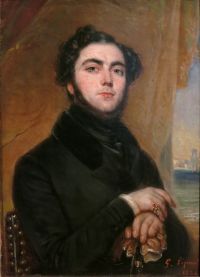
Portrait of Eugène Sue Eugène Sue,  The Mysteries of Paris, illustrated with etchings…

“ Musette! Ah, Musette, [Pg 111] Musette, I shall be always feeding you and patting you to make you know me."
"Now we will finish the inside of your apartment, Fleur-de-Marie. The curtains and furniture are green, like the blinds; and outside the window grow an enormous rose-tree and honeysuckle, which entirely cover this side of the farm, and so surround your casements that you have only to stretch out your hand to gather a large bunch of roses and honeysuckle wet with the early morning dew."
"Ah, M. Rodolph, what a good painter you are!"
”
Source: Gutenberg

Alfred J. Hipkins,  Musical Instruments, Historic, Rare and Unique

“ The Musette, which has practically displaced the Cornemuse in use, is a softer, sweeter instrument, with a double reed to a very narrow cylindrical pipe, the effect of which is to make it sound like a stopped pipe, an octave lower. This accounts for the short appearance of the instrument. The drones, as it will be seen, are on a more artificial principle than those of the Cornemuse. Another difference is that the bag is always inflated by a small pair of bellows worked by the player's left arm. ”
Source: Gutenberg

Kathleen Schlesinger,  1911 Encyclopædia Britannica (1910)

“ The modern Lowland bag-pipe differs from the Highland bag-pipe mainly in that it is blown by bellows instead of by the mouth.
The Northumbrian or Border bag-pipe, also blown by means of bellows, is chiefly distinguished by having a chaunter stopped at the lower end so that when all the holes are closed, the pipe is silent. There are seven finger-holes, one for the thumb, and a varying number of keys. The four drones are fixed in one stock and are tuned by means of stoppers, so that, as in the musette, any one of them may be silenced.
”
Source: Wikisource

Get perspective with Kwize: daily news enlightened by great literature