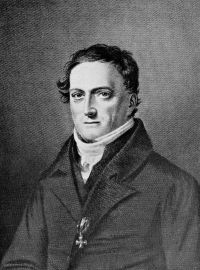
Johann Friedrich Herbart

Definition and stakes

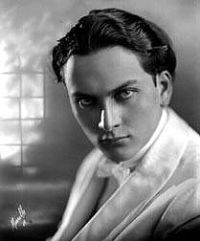
Portrait of Manly Palmer Hall Manly Palmer Hall The Secret Teachings of All Ages… (1928)

As the Divine Mind is an eternal process of thought never accomplished, Hegel assails the very foundation of theism and his philosophy limits immortality to the everflowing Deity alone. Evolution is consequently the never-ending flow of Divine Consciousness out of itself; all creation, though continually moving, never arrives at any state other than that of ceaseless flow.
Johann Friedrich Herbart's philosophy was a realistic reaction from the idealism of Fichte and von Schelling. To Herbart the true basis of philosophy was the great mass of phenomena continually moving through the human mind.
Source: Wikisource

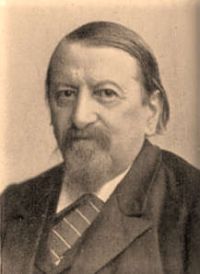
Portrait of Johann Friedrich Herbart Johann Friedrich Herbart Outlines of Educational Doctrine

All the sunshine and warmth in the world will not cause a pebble to sprout; so no external influences whatever can develop mind where there is none to develop. The exigencies of Herbart’s metaphysics drove him into a crusade against Kant’s doctrine of innate freedom, or transcendental will; all the freedom that Herbart would admit was that psychological freedom which is acquired through instruction and training. The quarrel belongs to eighteenth-century metaphysics, not to modern psychology, nor to education
Source: Gutenberg

Portrait of Johann Friedrich Herbart Johann Friedrich Herbart Outlines of Educational Doctrine

Herbart thought Kant’s doctrine of transcendental will one of absolute volitional caprice, yet the followers of Kant have been among the most energetic promoters of mental and moral training. Herbart thinks he sees in this remark a chance to put his philosophical opponents out of court, to the benefit of his own system. If one philosopher develops a system of “fatalism” and another one of “absolute free will,” the one may be charged with making education impossible and the other with making it futile.
Source: Gutenberg

Get perspective with Kwize: daily news enlightened by great literature