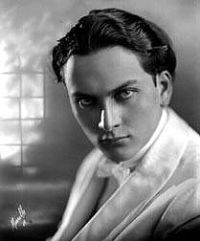
Manly Palmer Hall

Manly Palmer Hall

Summary

Portrait of Manly Palmer Hall Manly Palmer Hall The Secret Teachings of All Ages… (1928)

The true subject of Arthur Schopenhauer's philosophy is the will; the object of his philosophy is the elevation of the mind to the point where it is capable of controlling the will. Schopenhauer likens the will to a strong blind man who carries on his shoulders the intellect, which is a weak lame man possessing the power of sight. The will is the tireless cause of manifestation and every part of Nature the product of will. The brain is the product of the will to know; the hand the product of the will to grasp.
Source: Wikisource

Portrait of Manly Palmer Hall Manly Palmer Hall The Secret Teachings of All Ages… (1928)

Nietzsche's doctrine did not liberate the masses; it rather placed over them supermen for whom their inferior brothers and sisters should be perfectly reconciled to die. Ethically and politically, the superman was a law unto himself. To those who understand the true meaning of power to be virtue, self-control, and truth, the ideality behind Nietzsche's theory is apparent. To the superficial, however, it is a philosophy heartless and calculating, concerned solely with the survival of the fittest.
Source: Wikisource

Portrait of Manly Palmer Hall Manly Palmer Hall The Secret Teachings of All Ages… (1928)

As the Divine Mind is an eternal process of thought never accomplished, Hegel assails the very foundation of theism and his philosophy limits immortality to the everflowing Deity alone. Evolution is consequently the never-ending flow of Divine Consciousness out of itself; all creation, though continually moving, never arrives at any state other than that of ceaseless flow.
Johann Friedrich Herbart's philosophy was a realistic reaction from the idealism of Fichte and von Schelling. To Herbart the true basis of philosophy was the great mass of phenomena continually moving through the human mind.
Source: Wikisource

Get perspective with Kwize: daily news enlightened by great literature