Summary

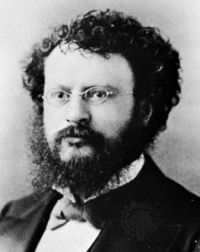
Portrait of John Fiske John Fiske The Idea of God as Affected by Modern Knowledge

No ingenuity of argument can bring us to believe that the infinite Sustainer of the universe will "put us to permanent intellectual confusion." There is in every earnest thinker a craving after a final cause; and this craving can no more be extinguished than our belief in objective reality. Nothing can persuade us that the universe is a farrago of nonsense. Our belief in what we call the evidence of our senses is less strong than our faith that in the orderly sequence of events there is a meaning which our minds could fathom were they only vast enough.
Source: Gutenberg

Portrait of John Fiske John Fiske The Idea of God as Affected by Modern Knowledge

To him no part of the universe is godless. In the swaying to and fro of molecules and the ceaseless pulsations of ether, in the secular shiftings of planetary orbits, in the busy work of frost and raindrop, in the mysterious sprouting of the seed, in the everlasting tale of death and life renewed, in the dawning of the babe's intelligence, in the varied deeds of men from age to age, he finds that which awakens the soul to reverential awe; and each act of scientific explanation but reveals an opening through which shines the glory of the Eternal Majesty.
Source: Gutenberg

Portrait of John Fiske John Fiske The Idea of God as Affected by Modern Knowledge

We see Man still the crown and glory of the universe and the chief object of divine care, yet still the lame and halting creature, loaded with a brute-inheritance of original sin, whose ultimate salvation is slowly to be achieved through ages of moral discipline. We see the chief agency which produced him—natural selection which always works through strife—ceasing to operate upon him, so that, until human strife shall be brought to an end, there goes on a struggle between his lower and his higher impulses, in which the higher must finally conquer.
Source: Gutenberg

Get perspective with Kwize: daily news enlightened by great literature