Summary

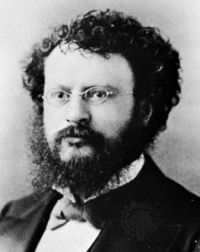
Portrait of John Fiske John Fiske Through Nature to God

In such a universe we may look in vain for any sanction for morality, any justification for love and self-sacrifice; we find no hope in it, no consolation; there is not even dignity in it, nothing whatever but resistless all-producing and all-consuming energy.
Such a universe, however, is not the one in which we live. In the cosmic process of evolution, whereof our individual lives are part and parcel, there are other agencies at work besides natural selection, and the story of the struggle for existence is far from being the whole story.
Source: Gutenberg

Portrait of John Fiske John Fiske Through Nature to God

Hence, well-nigh universally has philosophy proceeded upon the assumption, whether tacit or avowed, that pain and wrong are things hard to be reconciled with the theory that the world is created and ruled by a Being at once all-powerful and all-benevolent. Why does such a Being permit the misery that we behold encompassing us on every side? When we would fain believe that God is love indeed, and love creation's final law, how comes it that nature, red in tooth and claw with ravine, shrieks against our creed?
Source: Gutenberg

Portrait of John Fiske John Fiske Through Nature to God

To return to our question, how could we have good without evil, we must pause for a moment and inquire into the constitution of the human mind. What we call the soul, the mind, the conscious self, is something strange and wonderful. In our ordinary efforts to conceive it, invisible and impalpable as it is, we are apt to try so strenuously to divorce it from the notion of substance that it seems ethereal, unreal, ghostlike. Yet of all realities the soul is the most solid, sound, and undeniable. Thoughts and feelings are the fundamental facts from which there is no escaping.
Source: Gutenberg

Get perspective with Kwize: daily news enlightened by great literature