Hegelianism

Definition and stakes

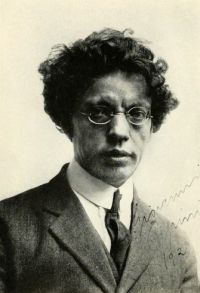
Portrait of Herbert Ernest Cushman Herbert Ernest Cushman,  A Beginner's History of Philosophy…

“ What discredited Hegelianism in particular and philosophy in general in the eyes of the nineteenth century was (1) the errors of Hegelianism as to facts; (2) the patronizing tone of the Hegelians toward scientists like Copernicus, Newton, and Lavoisier; and (3) the refusal of the Hegelians to test hypotheses by facts. The opposition against Hegel was against his principles, his method, and his conclusions. At the downfall of Napoleon the age gave up the hope of reconstructing the world either politically or philosophically. The new spirit was scientific and positive. ”

Source: Gutenberg

William Wallace and John Henry Muirhead,  1911 Encyclopædia Britannica (1911)

“ Thus Hegelianism reduces dogmatism, scepticism and mysticism to factors in philosophy. The abstract or dogmatic thinker believes his object to be one, simple and stationary, and intelligible apart from its surrounding. He speaks, e.g., as if species and genera were fixed and unchangeable; and fixing his eye on the ideal forms in their purity and self-sameness, he scorns the phenomenal world, whence this identity and persistence are absent. ”
Source: Wikisource

P. Austin Nuttall,  The Nuttall Encyclopædia

“ Hegelianism, the philosophy of Hegel, which resolves being into thought, and thought into the unity of the logical moments of simple apprehension, judgment, and reason, all purely spiritual acts, whereby being in itself, or seyn, becomes other than itself, or daseyn, and returns into itself, or für sich seyn, the universal being first by separating from itself particularised, and then by return into itself individualised, the whole being what Hegel characterises as Der Process des Geistes, "The Process of the Spirit." ”
Source: Gutenberg

Get perspective with Kwize: daily news enlightened by great literature